Saxenda (Drug class: GLP-1 receptor agonist — weight-management product)
US Saxenda liraglutide subcutaneous pen: long-term weight management with reduced-calorie eating and increased activity in eligible adults and adolescents aged 12 years and older. Age, weight and health criteria are explained below. Final US wholesaler shipments are planned for late January 2027.
Educational draft · independent clinical review pending. Silent mechanism animation available; no recorded narration.
Uses / Symptoms
- Long-term weight reduction in the label-defined obesity and adult-overweight populations
- Pediatric scope starts at age 12 and requires obesity and body weight above 60 kg
- Used with reduced-calorie eating and increased physical activity
Effects
- Activates GLP-1 signaling involved in appetite and food intake
- Can reduce calorie intake and help maintain weight reduction
- Not a direct fat-burning medicine or a guarantee of a particular weight change
Side effects
- Nausea, vomiting, diarrhea and constipation are common
- Important risks include pancreatitis, gallbladder disease, dehydration and increased resting heart rate
- Boxed thyroid C-cell tumor warning; hypoglycemia can occur, including in pediatric patients
How does Saxenda work? What is the Mechanism Of Action (MOA)?
Saxenda activates GLP-1 receptors involved in appetite regulation. It can help reduce hunger and food intake, supporting weight loss alongside eating and activity changes. It does not directly burn fat or guarantee a particular result.
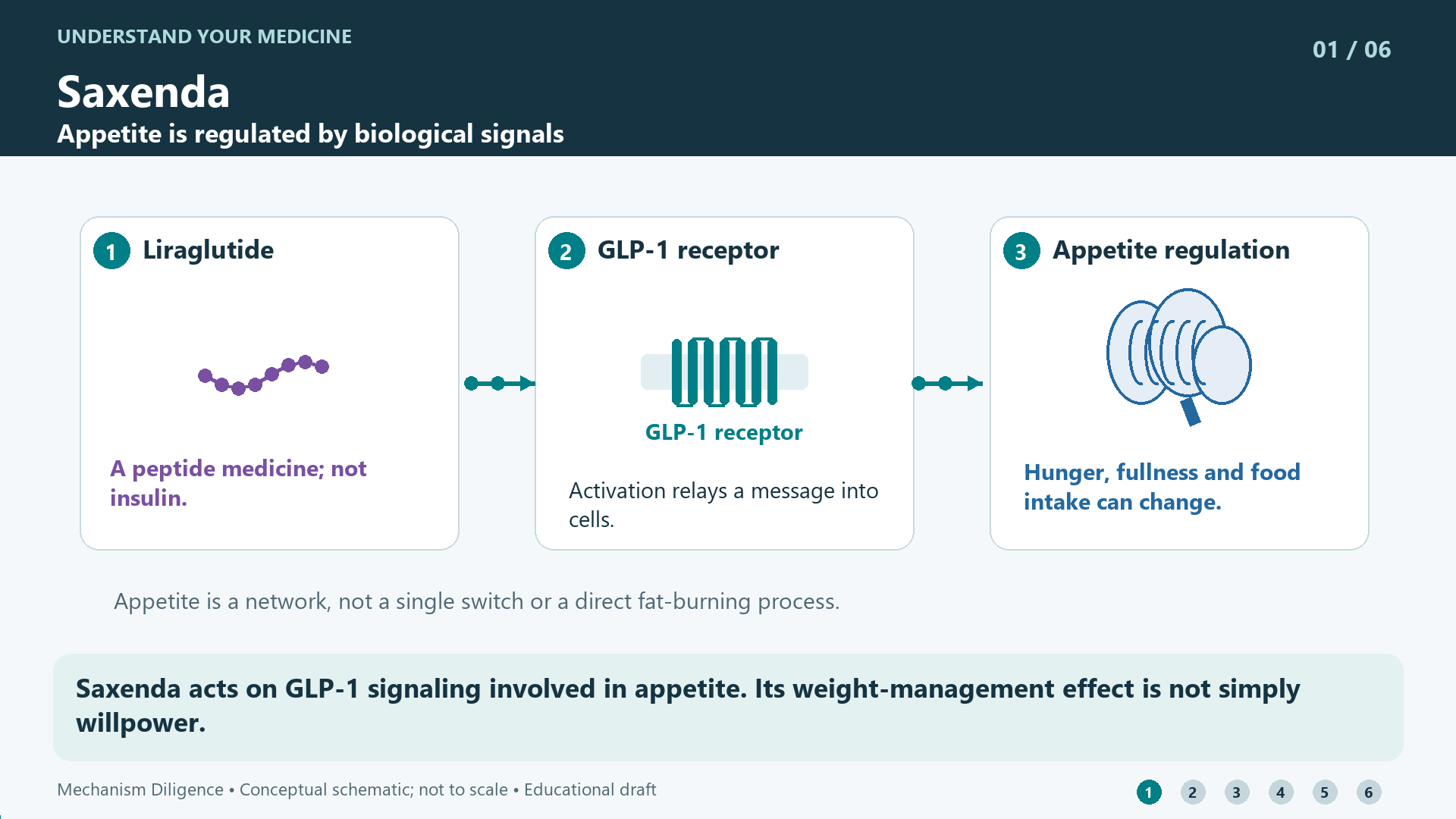
The mechanism, step by step
- Appetite is regulated by biological signals
GLP-1 is one signal involved in regulating appetite and calorie intake; body-weight regulation is not controlled by one pathway alone.
- Liraglutide activates GLP-1 receptors
The modified peptide provides longer-lasting receptor stimulation than rapidly degraded native GLP-1.
- Food intake can decrease
Human studies support reduced appetite and calorie intake. The label does not attribute weight loss to increased 24-hour energy expenditure.
- Gastric and glucose effects coexist
Liraglutide also delays gastric emptying and changes glucose-dependent insulin and glucagon secretion. These actions do not turn Saxenda into a substitute for a diabetes product.
- Weight response is assessed over time
Clinical trials support weight-management benefit with lifestyle intervention, but the magnitude and tolerability vary. Experimental brain-pathway findings are not a complete map of individual response.
A perspective-aware, six-chapter visual narration is available when JavaScript is enabled.
Questions & Answers (FAQ)
How does Saxenda work?
Saxenda activates GLP-1 receptors involved in appetite regulation. It can help reduce hunger and food intake, supporting weight loss alongside eating and activity changes. It does not directly burn fat or guarantee a particular result.
Who is included in the current US indication?
Saxenda is a weight-management treatment for eligible adults with obesity, or overweight plus a weight-related condition, and adolescents aged 12 years and older with obesity who weigh more than 60 kg. The prescriber should confirm exact adult eligibility against the current label. Treatment accompanies reduced-calorie eating and increased activity; pediatric use with type 2 diabetes is not established.
Is Saxenda being discontinued?
The US manufacturer notice checked October 17, 2026 announces final shipments to wholesalers in late January 2027. It describes a strategic portfolio decision, not a safety or quality concern. This future shipment endpoint does not verify pharmacy stock or mean FDA approval has already been withdrawn.
Is Saxenda the same treatment as Victoza?
Both contain liraglutide, but their indications and treatment instructions differ. Saxenda is the weight-management product. Its label advises against combining it with another liraglutide product or any other GLP-1 receptor agonist; do not self-substitute brands.
Will everyone lose the same amount of weight?
No. Clinical trials compare average and responder outcomes, and individual results vary. The adolescent randomized trial supported benefit alongside lifestyle treatment but also found frequent gastrointestinal effects; it does not guarantee an outcome for every young person.
Which adverse effects are common?
Nausea, vomiting, diarrhea, constipation, abdominal discomfort and injection-site reactions are among reported effects. Report persistent symptoms, inability to maintain fluids, or a racing heartbeat at rest.
What does the boxed warning say?
Liraglutide caused thyroid C-cell tumors in rodents; whether it causes such tumors in humans is unknown. Saxenda is contraindicated with personal or family medullary thyroid carcinoma or MEN2. A neck lump, persistent hoarseness or swallowing difficulty warrants assessment.
Can low blood glucose occur without a diabetes indication?
Yes. Risk is increased in adults taking insulin or sulfonylureas, and hypoglycemia also occurred in pediatric Saxenda trials without type 2 diabetes. The care team should explain symptoms and monitoring appropriate to the person.
Which abdominal symptoms need assessment?
Severe persistent abdominal pain can indicate pancreatitis. Upper-abdominal pain, fever or jaundice can suggest gallbladder disease. Promptly seek medical assessment rather than attributing severe symptoms to ordinary nausea.
Why discuss kidney disease and dehydration?
Vomiting or diarrhea can cause fluid loss and acute kidney injury. The label reports limited experience across renal-impairment groups, including end-stage disease; it does not use BCise's fixed eGFR restriction. Kidney history and ongoing symptoms need individualized review.
What if pregnancy is planned or recognized?
Discuss pregnancy plans before treatment. The current label warns of possible fetal harm and directs discontinuation when pregnancy is recognized; weight-loss treatment offers no benefit during pregnancy. Contact the prescriber promptly for a plan.
What else should the care team know?
Tell the team about severe gastroparesis, all oral medicines, and planned anesthesia or deep sedation because stomach emptying is delayed. The label does not establish one medicine-holding interval that prevents stomach contents entering the lungs. Get a procedure-specific plan from the treating team.
Online stores and Pharmacies (Buy)
Prescription required. Novo Nordisk announces final Saxenda shipments to US wholesalers in late January 2027; this is a future commercial endpoint, not a live inventory report. Discuss continuity with the treating team. The official support link is provided without a price, savings-eligibility promise or substitute recommendation.
No live price, stock or individual eligibility is verified here.
Animation chapters, evidence & visual limits
Liraglutide injection for long-term weight management in label-eligible people with reduced-calorie diet and physical activity. This is not Victoza's diabetes/cardiovascular product indication.
Educational draft; independent clinical review pending. Original explanatory schematics, not atomic structures, microscopy, measured concentrations or patient simulations. Selective mechanism and safety context, not complete prescribing information or dosing/switching instructions. No exact human brain circuit, increased energy burning, guaranteed weight loss or weight-based judgment is depicted. Current label eligibility wording is retained in the product References; this film does not adjudicate the adult/>60 kg wording discrepancy.
Original conceptual illustrations. AI-assisted editorial source check; independent clinical review pending. No recorded narration.
Chapter 1: Appetite is regulated by biological signals
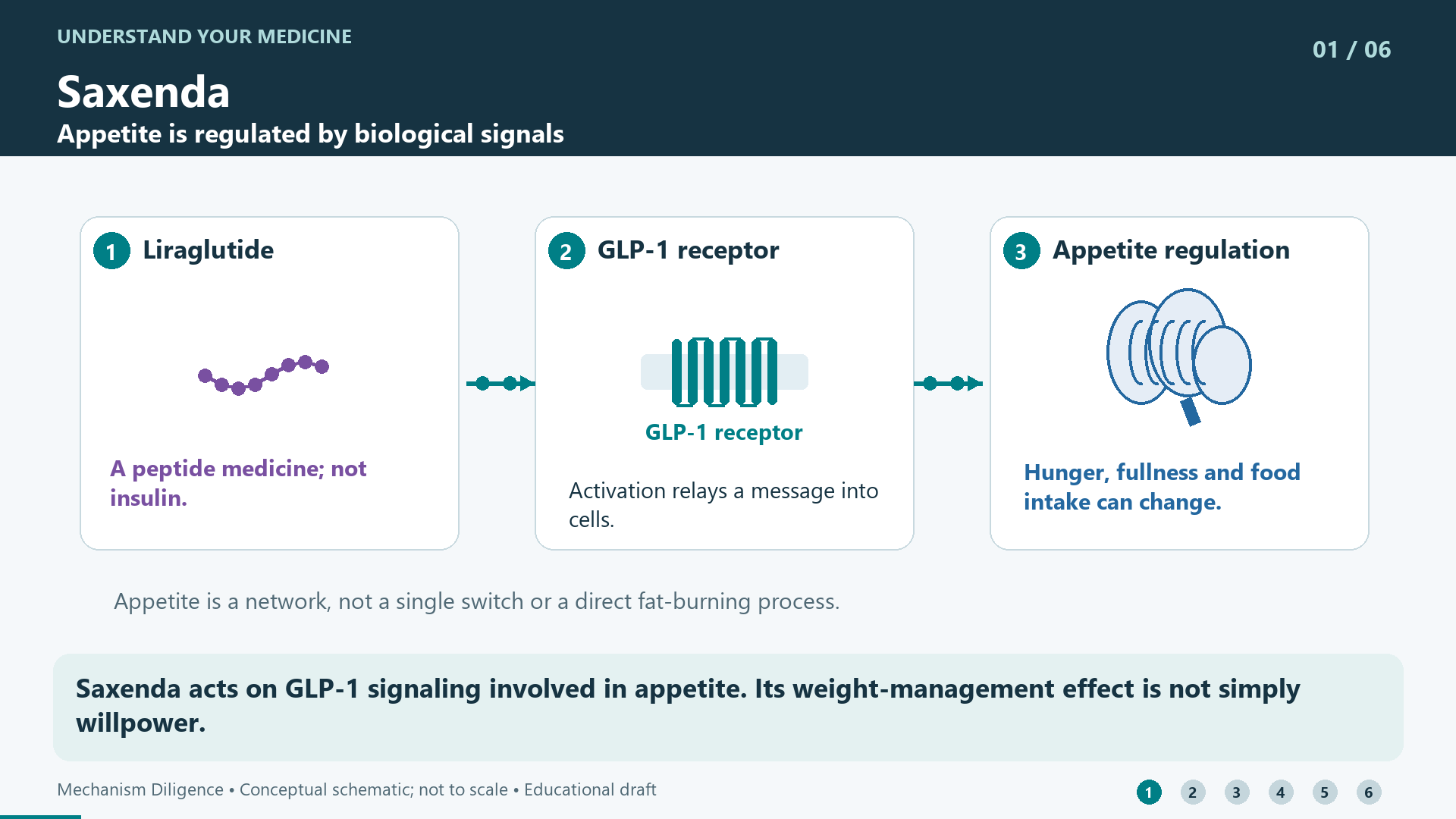
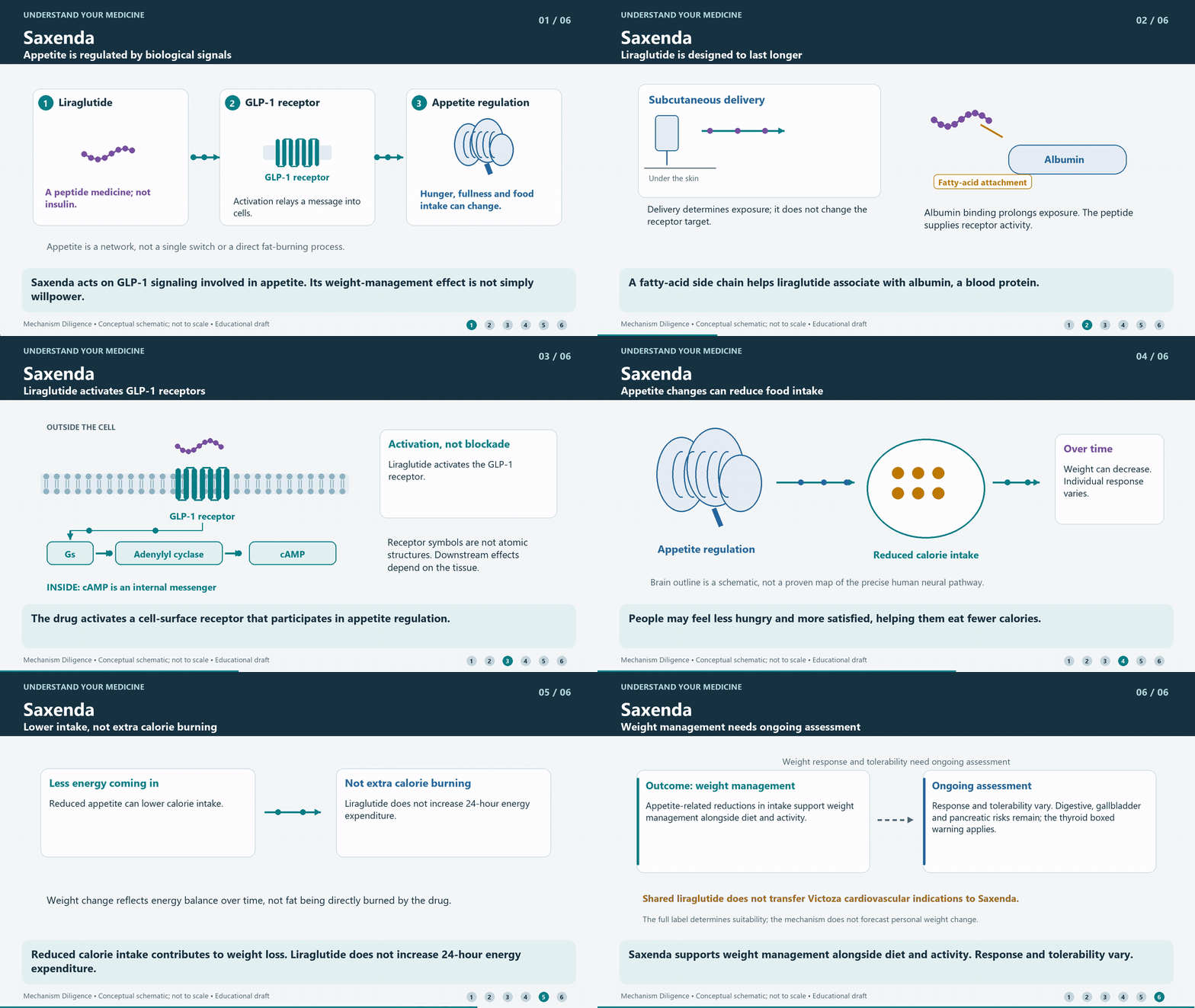
Saxenda acts on GLP-1 signaling involved in appetite. Its weight-management effect is not simply willpower.
GLP-1 receptors occur in brain regions involved in appetite regulation. Human appetite and food-intake measurements support a biological effect; animal localization does not establish a complete human neural circuit.
The network is conceptual; specific pathways and individual responses vary.
- Saxenda US prescribing information — Novo Nordisk · Revised February 2026; sections 1, 5, 11–12, 14; boxed warning. Scope deliberately avoids adjudicating adult/>60kg wording inconsistency between section 1 and Medication Guide. · Primary source; relevant sections inspected · checked 2026-10-17
- van Can et al. — Liraglutide, appetite and energy metabolism · International Journal of Obesity 2014;38:784–793; DOI 10.1038/ijo.2013.162. · Primary human mechanistic trial; indexed abstract and article excerpts inspected; direct PMC blocked. Adults with obesity without diabetes. · checked 2026-10-17
Chapter 2: Liraglutide is designed to last longer
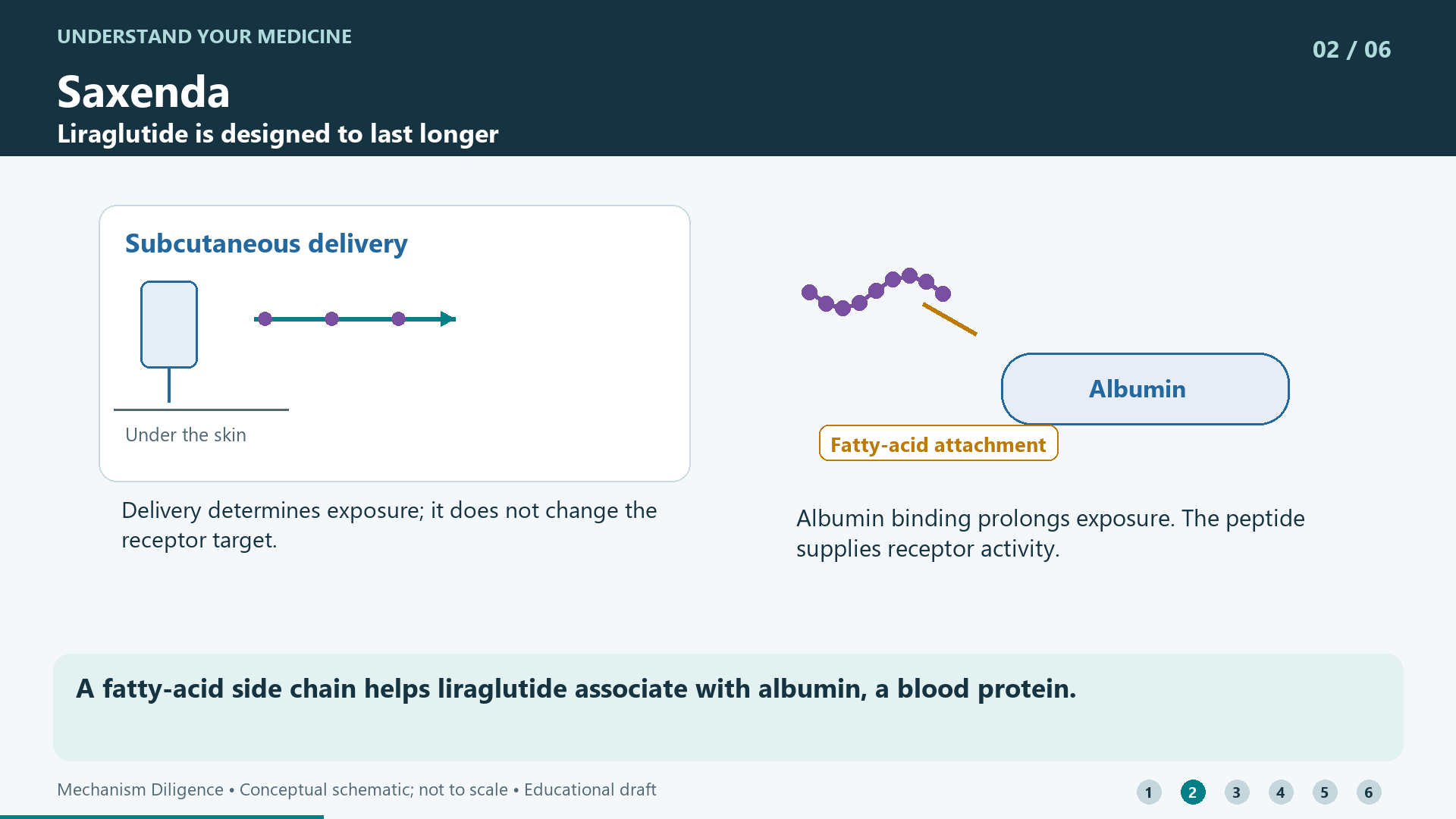
A fatty-acid side chain helps liraglutide associate with albumin, a blood protein.
Its extended exposure reflects self-association, protein binding and stability against enzymatic degradation. Albumin association is a pharmacokinetic design feature, distinct from activation of the GLP-1 receptor.
Cartoon sizes and binding times are not measured; no claim of complete protection from breakdown.
- Saxenda US prescribing information — Novo Nordisk · Revised February 2026; sections 1, 5, 11–12, 14; boxed warning. Scope deliberately avoids adjudicating adult/>60kg wording inconsistency between section 1 and Medication Guide. · Primary source; relevant sections inspected · checked 2026-10-17
- Knudsen et al. — Potent GLP-1 derivatives with prolonged pharmacokinetics · Journal of Medicinal Chemistry 2000;43:1664–1669; DOI 10.1021/jm9909645. · Primary medicinal chemistry study; indexed abstract inspected; albumin-binding design, not comparative clinical outcomes. · checked 2026-10-17
Chapter 3: Liraglutide activates GLP-1 receptors
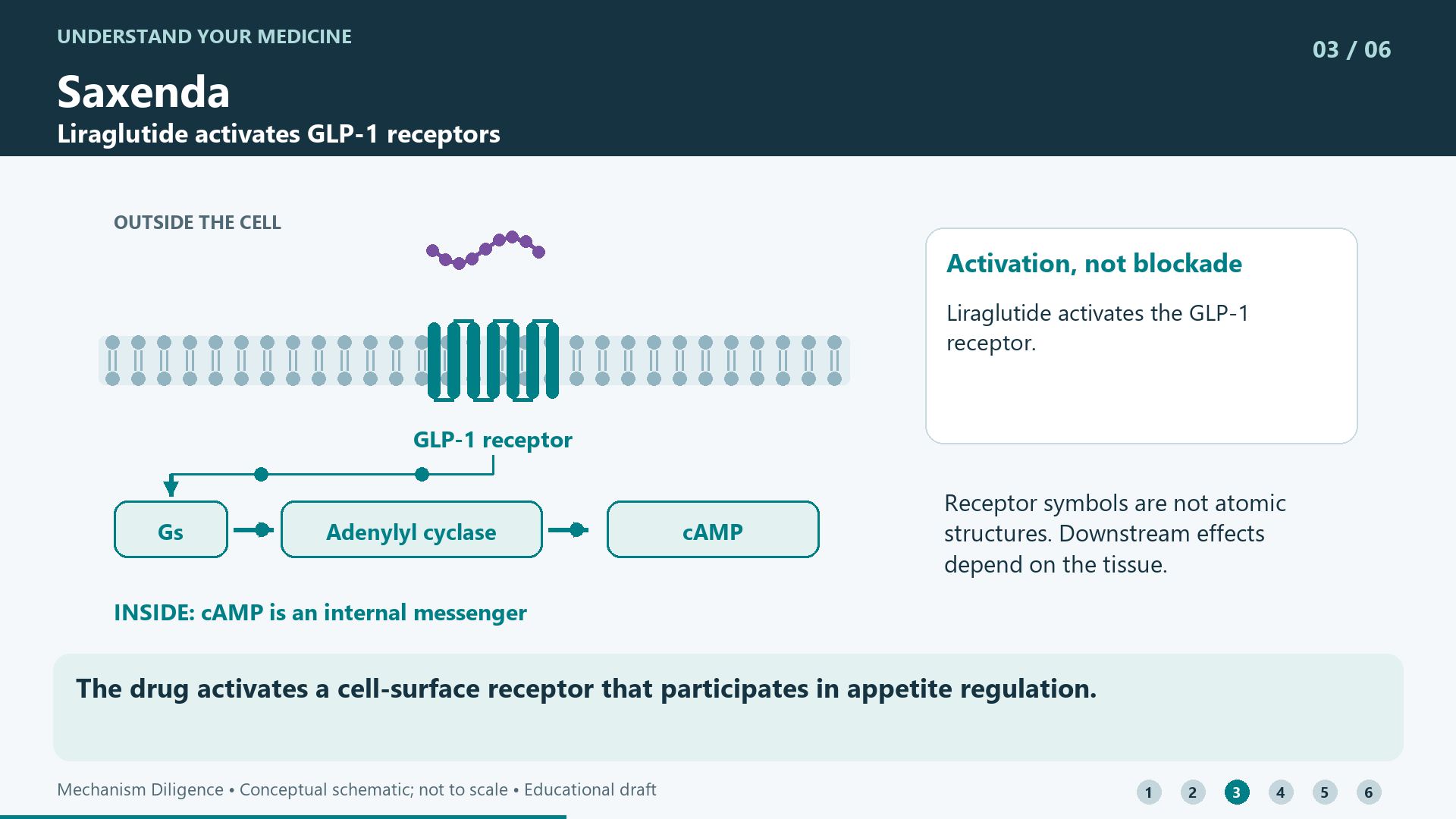
The drug activates a cell-surface receptor that participates in appetite regulation.
Liraglutide is a GLP-1 receptor agonist. Receptor activation is established, but precisely how different human neural pathways contribute to sustained weight change remains incompletely mapped.
No drug crossing a blood-brain barrier or exact neural location is asserted.
- Saxenda US prescribing information — Novo Nordisk · Revised February 2026; sections 1, 5, 11–12, 14; boxed warning. Scope deliberately avoids adjudicating adult/>60kg wording inconsistency between section 1 and Medication Guide. · Primary source; relevant sections inspected · checked 2026-10-17
Chapter 4: Appetite changes can reduce food intake
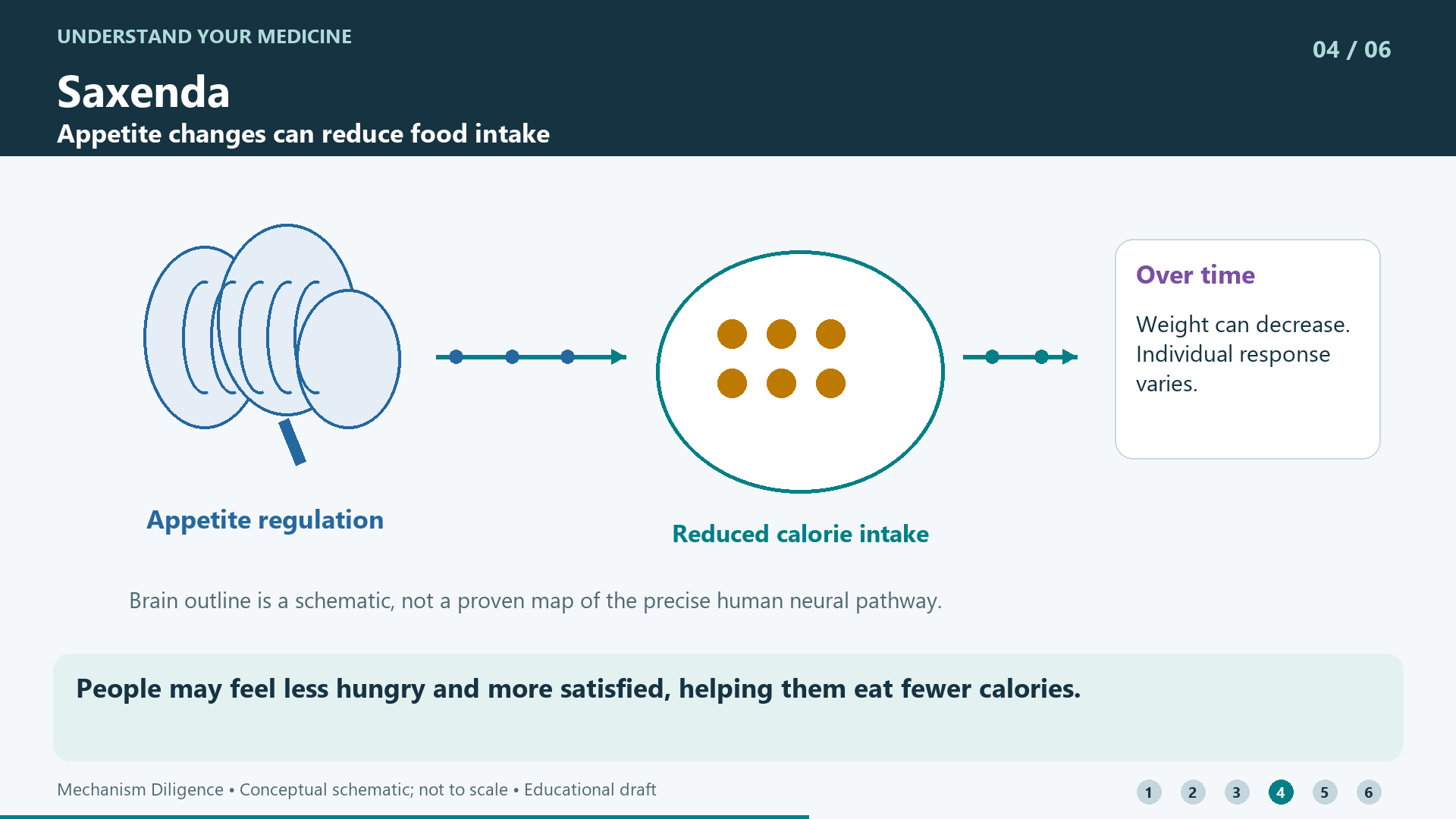
People may feel less hungry and more satisfied, helping them eat fewer calories.
Controlled human research measured appetite sensations and reduced food intake. These are group-level observations, not proof that every person experiences the same change or that nausea is necessary for benefit.
Food intake is influenced by many factors; the diagram is not a meal plan.
- Saxenda US prescribing information — Novo Nordisk · Revised February 2026; sections 1, 5, 11–12, 14; boxed warning. Scope deliberately avoids adjudicating adult/>60kg wording inconsistency between section 1 and Medication Guide. · Primary source; relevant sections inspected · checked 2026-10-17
- van Can et al. — Liraglutide, appetite and energy metabolism · International Journal of Obesity 2014;38:784–793; DOI 10.1038/ijo.2013.162. · Primary human mechanistic trial; indexed abstract and article excerpts inspected; direct PMC blocked. Adults with obesity without diabetes. · checked 2026-10-17
Chapter 5: Lower intake, not extra calorie burning
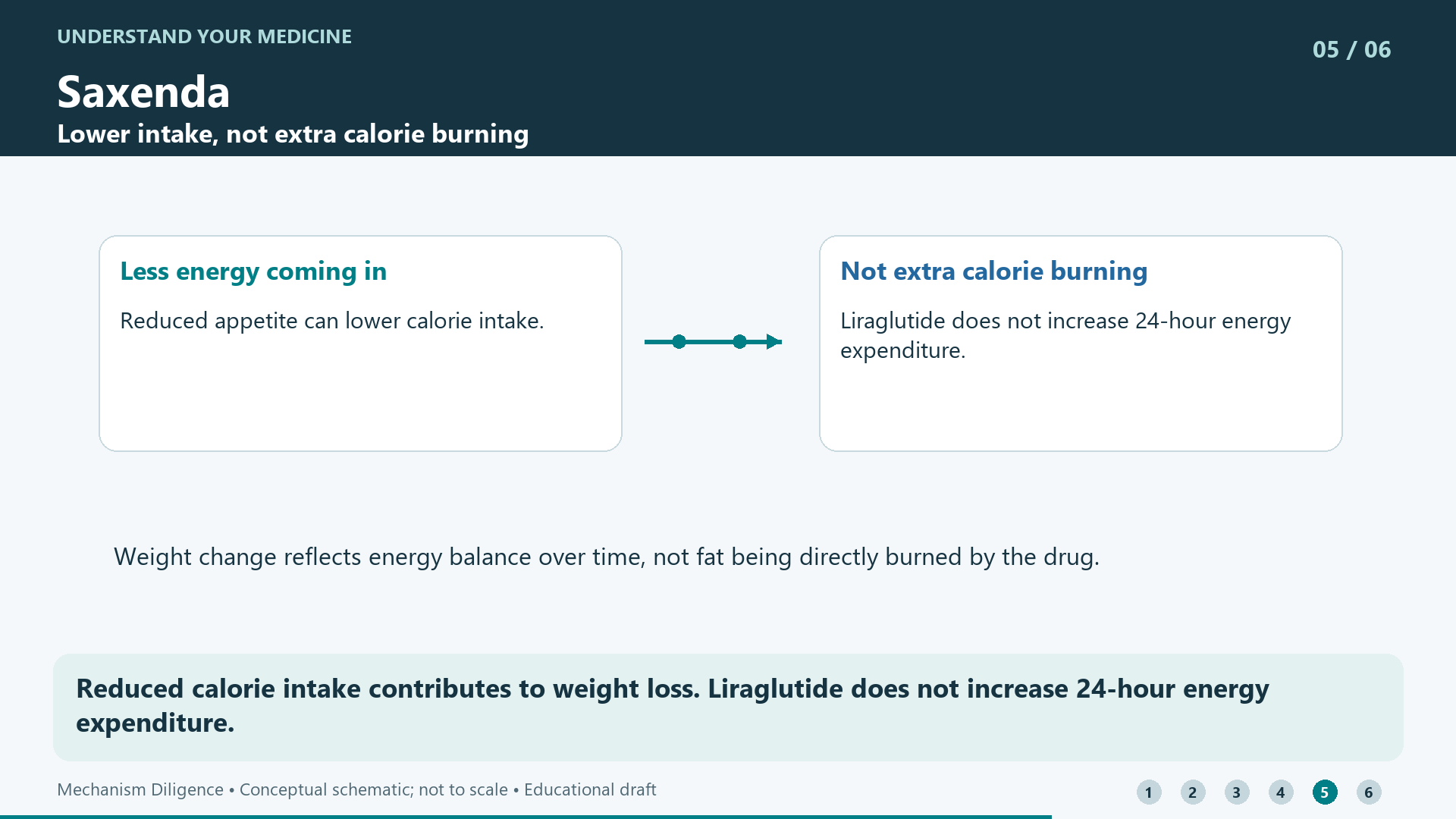
Reduced calorie intake contributes to weight loss. Liraglutide does not increase 24-hour energy expenditure.
The label distinguishes lower calorie intake from increased energy expenditure. Liraglutide also delays gastric emptying, but the weight mechanism is not adequately described as trapping food in the stomach.
No calorie numbers or individual weight trajectory are predicted.
- Saxenda US prescribing information — Novo Nordisk · Revised February 2026; sections 1, 5, 11–12, 14; boxed warning. Scope deliberately avoids adjudicating adult/>60kg wording inconsistency between section 1 and Medication Guide. · Primary source; relevant sections inspected · checked 2026-10-17
- van Can et al. — Liraglutide, appetite and energy metabolism · International Journal of Obesity 2014;38:784–793; DOI 10.1038/ijo.2013.162. · Primary human mechanistic trial; indexed abstract and article excerpts inspected; direct PMC blocked. Adults with obesity without diabetes. · checked 2026-10-17
Chapter 6: Weight management needs ongoing assessment
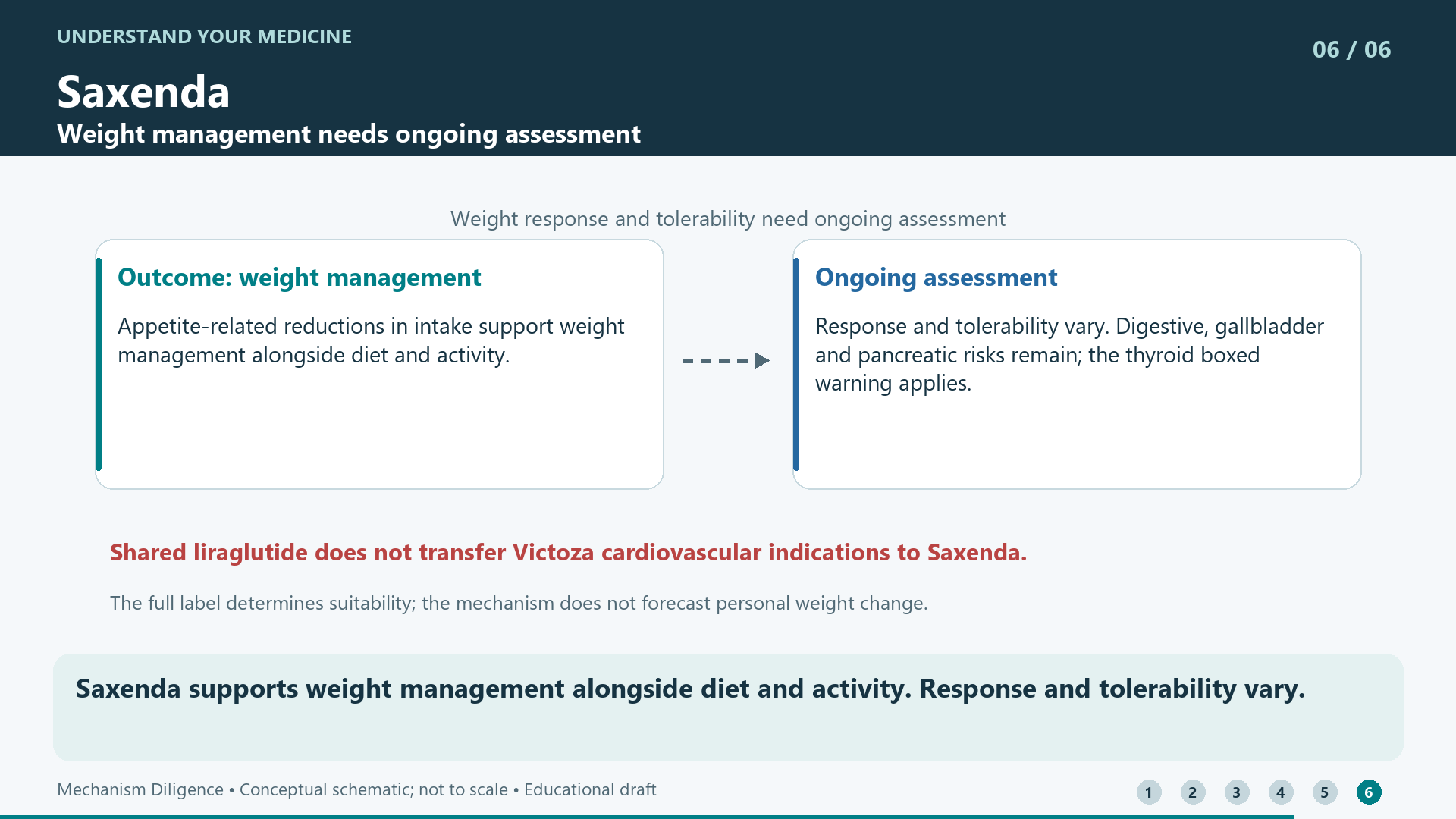
Saxenda supports weight management alongside diet and activity. Response and tolerability vary.
This brand's use differs from Victoza despite shared liraglutide. Important risks include gastrointestinal effects, gallbladder disease, pancreatitis and a thyroid C-cell boxed warning; the full label determines suitability.
Mechanism is not proof of suitability or an individual result; independent clinical review is pending.
- Saxenda US prescribing information — Novo Nordisk · Revised February 2026; sections 1, 5, 11–12, 14; boxed warning. Scope deliberately avoids adjudicating adult/>60kg wording inconsistency between section 1 and Medication Guide. · Primary source; relevant sections inspected · checked 2026-10-17
References & Sources
Source pages checked 2026-10-17. AI-assisted editorial source checking is not independent clinical review. Sources support the summary, mechanism, safety and access information; references are also kept beside each question.
- Novo Nordisk: Saxenda US prescribing information ↗ · Revised 02/2026; boxed warning; 1; 3–8; 11–12; 14; Medication Guide. Section 1 groups adults and pediatric patients with the >60 kg wording, whereas the Medication Guide attaches that threshold to adolescents; exact adult eligibility requires current-label confirmation, not a newly inferred restriction. Current revision removed the suicidal-behavior warning. Checked 2026-10-17.
- FDA: Saxenda June 2026 supplement labeling ↗ · S024; PI revised 02/2026, instructions for use revised 06/2026. Section 1 and Medication Guide page 28 corroborate the differing adult/pediatric weight-qualifier wording. Used to preserve the uncertainty rather than invent an adult weight rule. Checked 2026-10-17.
- NovoCare: Saxenda US discontinuation notice and support ↗ · Manufacturer notice: final wholesaler shipments late January 2027; strategic portfolio decision, not safety or quality related. No stock or price guarantee. Checked 2026-10-17.
- van Can et al. (2014): liraglutide, appetite and energy metabolism ↗ · Indexed primary-study abstract and current PI 12.1–12.2 cross-check; short randomized human trial in adults with obesity without diabetes. Full PMC access challenged during retrieval. Checked 2026-10-17.
- Kelly et al. (2020): liraglutide in adolescents with obesity ↗ · Primary randomized trial abstract: ages 12 to under 18; liraglutide versus placebo with lifestyle therapy; BMI outcome and gastrointestinal tolerability. Checked 2026-10-17.
- Novo Nordisk: Victoza US prescribing information — product distinction ↗ · Revised 10/2025; 1; 3; 11. Used to distinguish diabetes-product indications from Saxenda. Checked 2026-10-17.
Selective US-label-based information, not a complete safety list or a personal treatment recommendation. Do not change treatment based on this page; use the product-specific label and your care team's advice.