Medicine reading guide
Empagliflozin (Jardiance)
SGLT2 inhibitor
Adults using single-ingredient Jardiance oral tablets. Separate uses: type 2 diabetes, heart failure, or eligible chronic kidney disease. This guide excludes children and combination products.
Educational information. Independent clinical review pending. This is a selective explanation, not the full prescribing information.
Uses / Symptoms
- Type 2 diabetes, alongside diet and exercise.
- Heart failure; chronic kidney disease at risk of progression.
Effects
- Lowers blood sugar.
- Reduces specified heart or kidney risks in eligible groups.
Side effects
- Urinary and genital infections.
- Ketoacidosis, dehydration or serious infection.
Selected information; not a complete safety list. Full prescribing information and patient guidance ↗
How it works
Empagliflozin blocks a kidney protein that normally returns filtered sugar to your blood. More sugar leaves in urine instead. Its heart and kidney benefits are not explained by sugar loss alone.
Perspective answer sources
Section-two answers source-checked October 17, 2026; independent clinical review pending.
Read the mechanism, step by step
Empagliflozin blocks SGLT2, a kidney transporter. Less filtered glucose returns to the blood; more leaves in urine.
It also changes kidney sodium handling. The label describes possible effects on kidney pressure and heart workload; this is not a complete explanation of clinical benefits.
Common questions
What is it for?
Uses differ: glucose control in type 2 diabetes; cardiovascular-death reduction in type 2 diabetes with established cardiovascular disease; heart-failure outcomes; or specified kidney outcomes in eligible chronic kidney disease.
How does it work?
It helps kidneys remove glucose through urine.
Must I have diabetes?
No. Heart-failure and kidney-disease indications do not require diabetes.
Can anyone with kidney disease use it?
Eligibility depends on the treatment goal and kidney condition. Some kidney diseases are excluded; glucose-lowering becomes less effective with poor kidney function.
What side effects might I notice?
More urination or thirst can occur. Report persistent or troublesome symptoms.
When should I get urgent help?
Stop taking it and get immediate medical help for possible ketoacidosis: nausea, vomiting, stomach pain, unusual tiredness or trouble breathing. Blood sugar need not be very high. Stop taking it and get emergency help for breathing or swallowing difficulty, or face/throat swelling.
Which infection symptoms matter?
Contact your doctor promptly for painful urination or genital symptoms. Pain, redness or swelling around the genitals or between the genitals and rectum, with fever or feeling unwell, needs immediate medical assessment.
Can other medicines interact?
Insulin or sulfonylureas increase low-blood-sugar risk. Diuretics increase fluid-loss risk; lithium levels may fall. Review all medicines with your pharmacist.
What about illness or surgery?
Ask for an illness, fasting and surgery plan in advance. Your team may temporarily withhold treatment before surgery or prolonged fasting to reduce ketoacidosis risk. Tell them if you cannot eat or drink normally.
How is treatment monitored?
Keep scheduled blood tests. Tell laboratory staff you take empagliflozin: urine glucose can be positive because of its action.
What about pregnancy or breastfeeding?
Discuss pregnancy promptly. Do not breastfeed while taking empagliflozin.
Why check my feet?
Report new foot pain, sores or signs of infection promptly. Follow your foot-care plan.
Animation chapters, evidence & visual limits
Adults using single-ingredient Jardiance tablets; separate indications for type 2 diabetes, heart failure and eligible chronic kidney disease. No pediatric, combination-product or dosing instruction.
Educational draft; independent clinical review pending. Transporter and nephron drawings are explanatory schematics, not measured structures, flow rates or patient simulations. The glucose-lowering pathway is better established than a complete causal account of heart and kidney outcomes. A mechanistic study in type 1 diabetes is research context, not authorization or advice for that use. No universal protection, normalized kidney function, guaranteed response or numerical benefit is depicted.
Original conceptual illustrations. AI-assisted editorial source check; independent clinical review pending. No recorded narration.
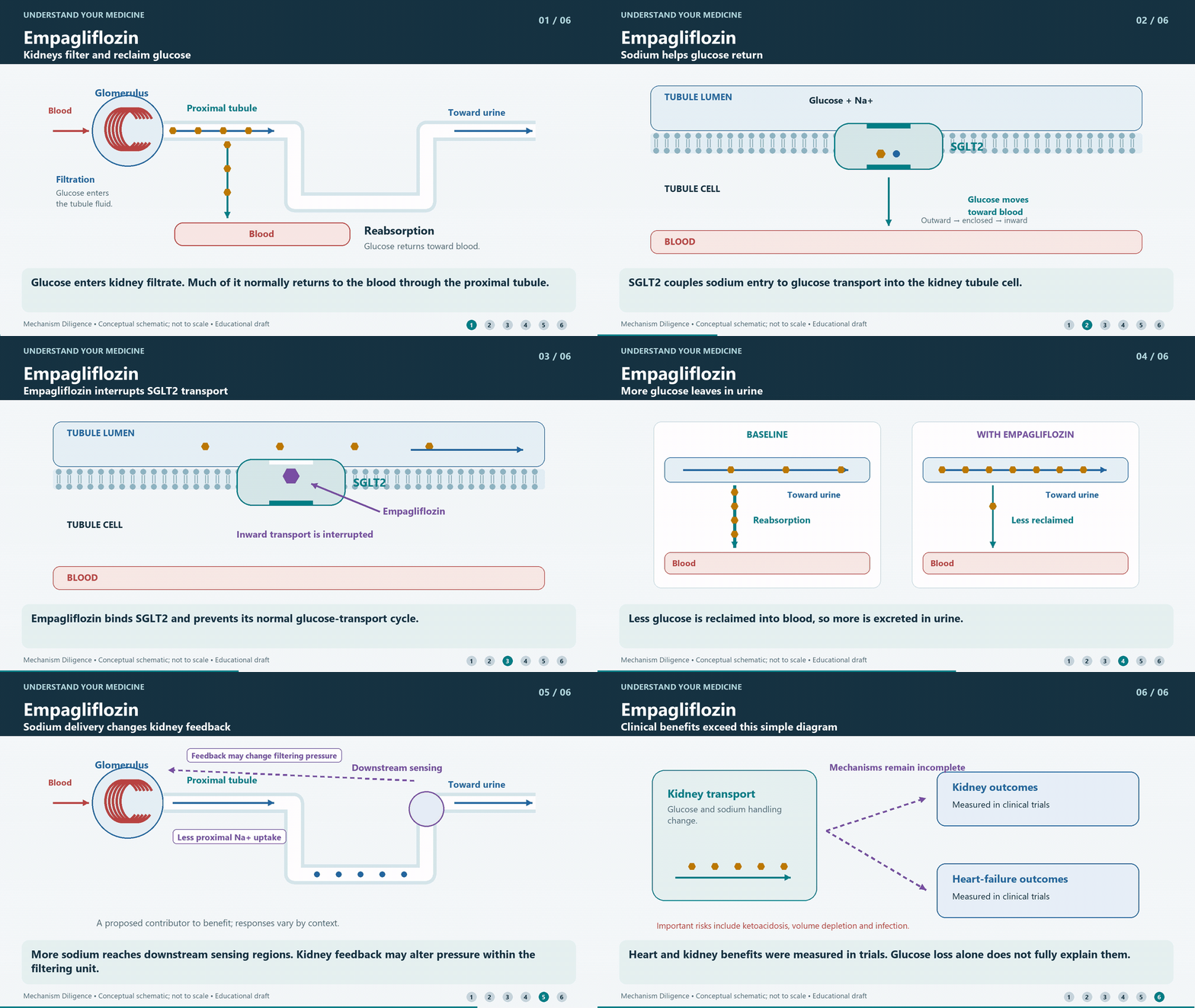
Chapter 1: Kidneys filter and reclaim glucose
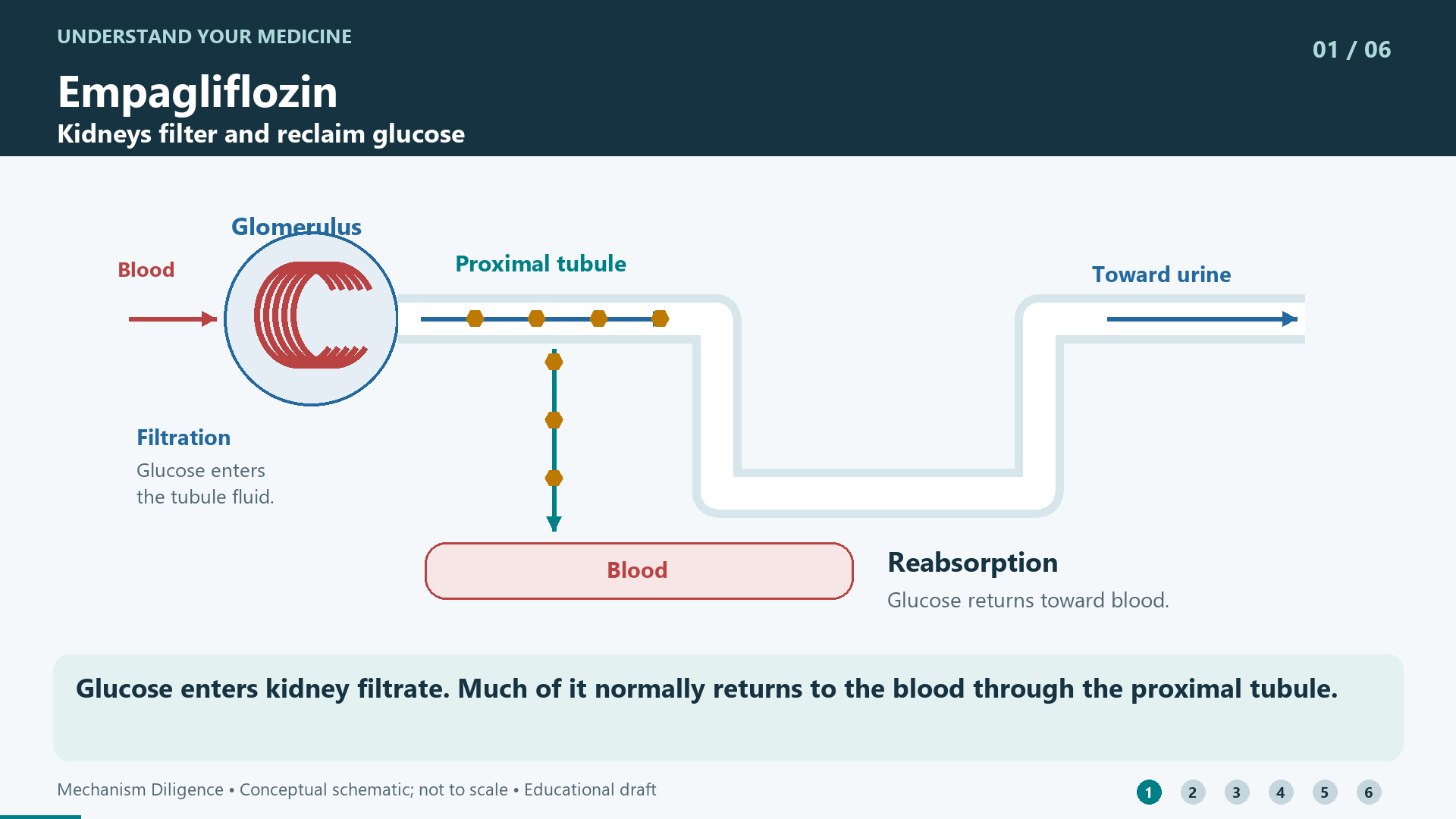
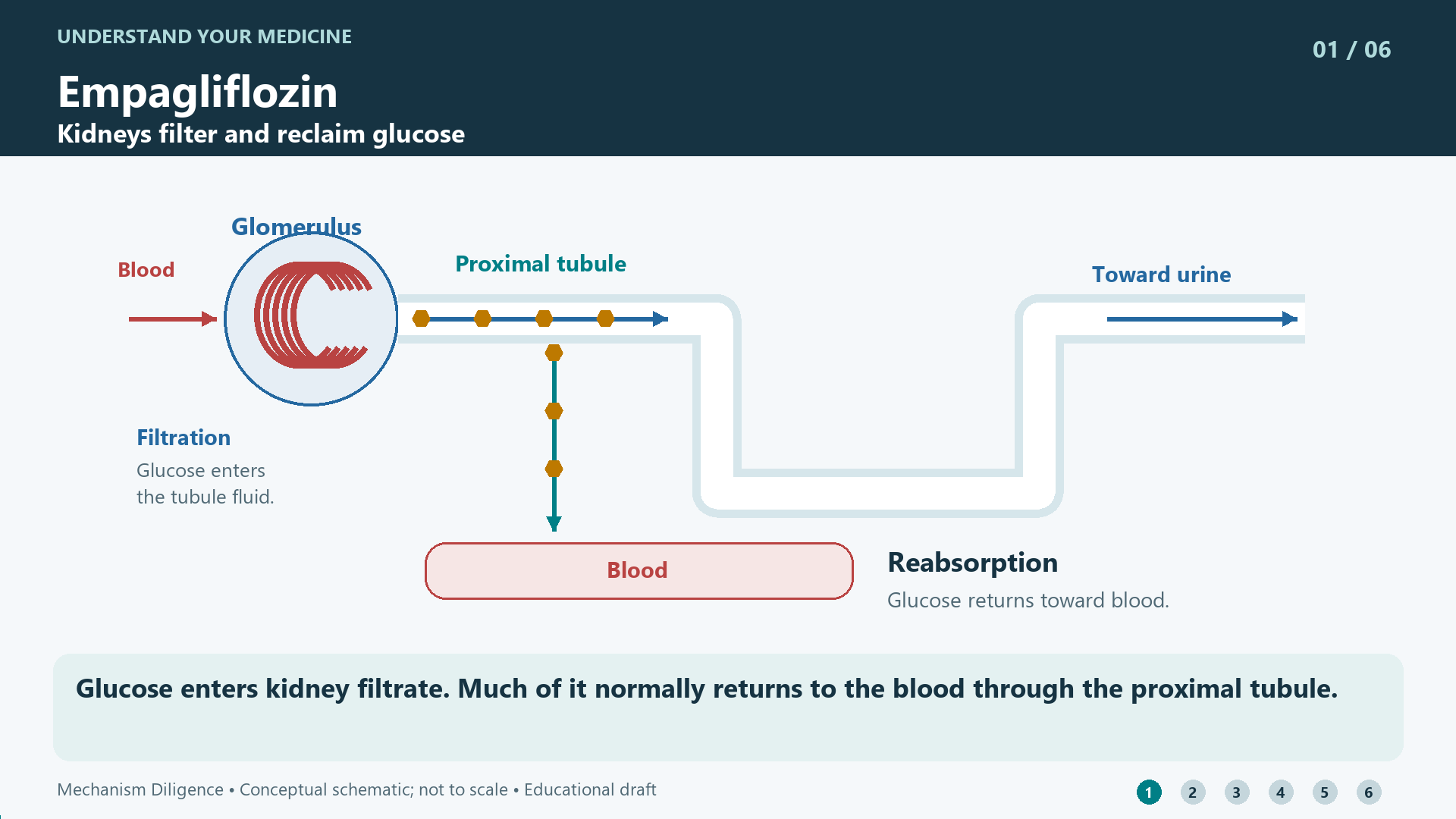
Glucose enters kidney filtrate. Much of it normally returns to the blood through the proximal tubule.
Filtration and reabsorption are distinct processes. SGLT2 in the proximal-tubule brush border retrieves much of the filtered glucose. Show the urine-facing lumen, epithelial cell and blood-facing side separately so glucose does not appear to move directly across an empty pipe wall.
One nephron stands for many. Dot counts and arrow widths do not represent filtered amounts or percentage reabsorption.
- Jardiance prescribing information — DailyMed / Boehringer Ingelheim · Sections 1, 5.1–5.3, 8.6, 12.1 and 12.2 · US prescribing information; selected sections inspected · checked 2026-10-17
- Mechanism of substrate recognition and release of human SGLT2 · Abstract; Introduction; Results on outward-open to occluded transition; DOI 10.1038/s41467-025-62421-6 · Primary cryo-EM and mutagenesis; indexed excerpts inspected · checked 2026-10-17
Chapter 2: Sodium helps glucose return
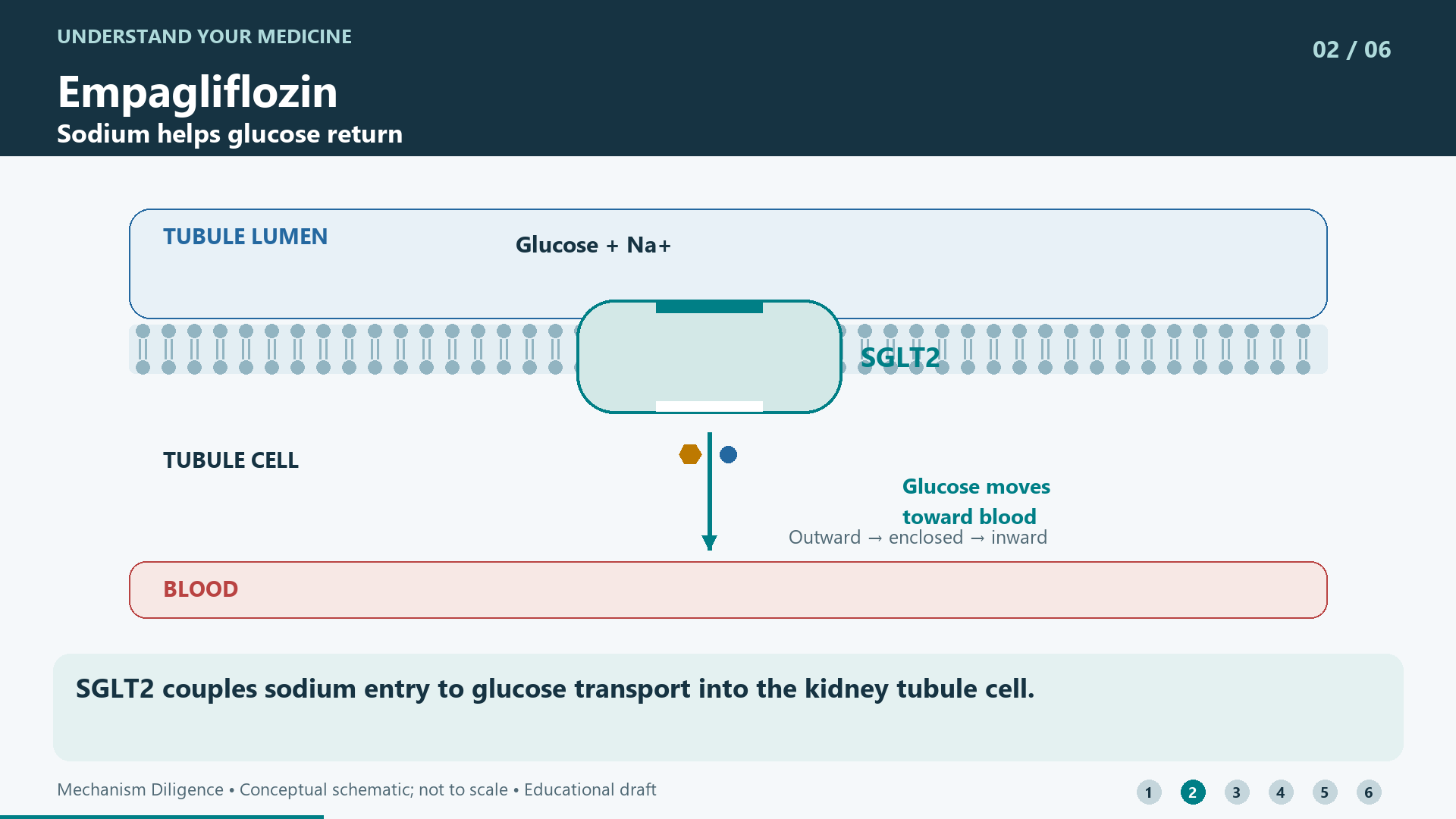
SGLT2 couples sodium entry to glucose transport into the kidney tubule cell.
SGLT2 uses the sodium electrochemical gradient. Structural studies capture outward-accessible, occluded and inward-facing states, supporting alternating access rather than an always-open pore. A cycle carries one sodium ion with one glucose molecule; the diagram omits machinery that maintains the gradient.
The sequence summarizes static structural states and functional evidence; it is not a directly filmed transport cycle or an atomic trajectory.
- Mechanism of substrate recognition and release of human SGLT2 · Abstract; Introduction; Results on outward-open to occluded transition; DOI 10.1038/s41467-025-62421-6 · Primary cryo-EM and mutagenesis; indexed excerpts inspected · checked 2026-10-17
Chapter 3: Empagliflozin interrupts SGLT2 transport
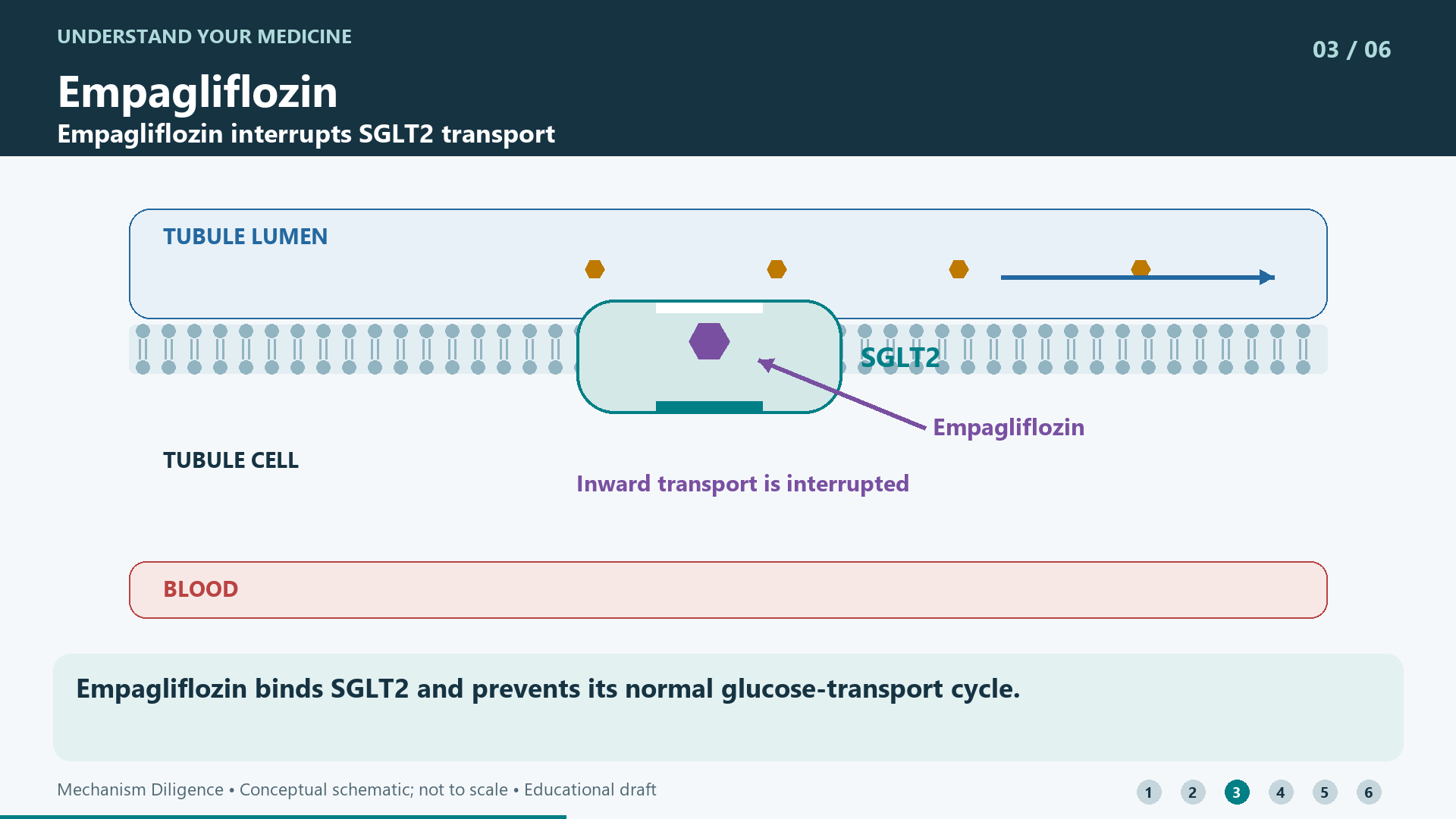
Empagliflozin binds SGLT2 and prevents its normal glucose-transport cycle.
An empagliflozin-bound human SGLT2–MAP17 structure places the inhibitor across the sugar-binding region and outer vestibule, stabilizing an outward-open state. That structural observation explains inhibited transport; the drawing does not simulate molecular docking or require invented atomic geometry.
The icon is not the molecule's actual shape. The transporter illustration omits MAP17 and many structural details; no binding-rate claim is made.
- Niu et al. — Structural basis of inhibition of the human SGLT2–MAP17 glucose transporter · Abstract and figure descriptions, especially Figures 3–4; Nature 601, 280–284 (2022) · Primary cryo-EM study; abstract/figure descriptions inspected; full methods not reviewed · checked 2026-10-17
- Mechanism of substrate recognition and release of human SGLT2 · Abstract; Introduction; Results on outward-open to occluded transition; DOI 10.1038/s41467-025-62421-6 · Primary cryo-EM and mutagenesis; indexed excerpts inspected · checked 2026-10-17
- Jardiance prescribing information — DailyMed / Boehringer Ingelheim · Sections 1, 5.1–5.3, 8.6, 12.1 and 12.2 · US prescribing information; selected sections inspected · checked 2026-10-17
Chapter 4: More glucose leaves in urine
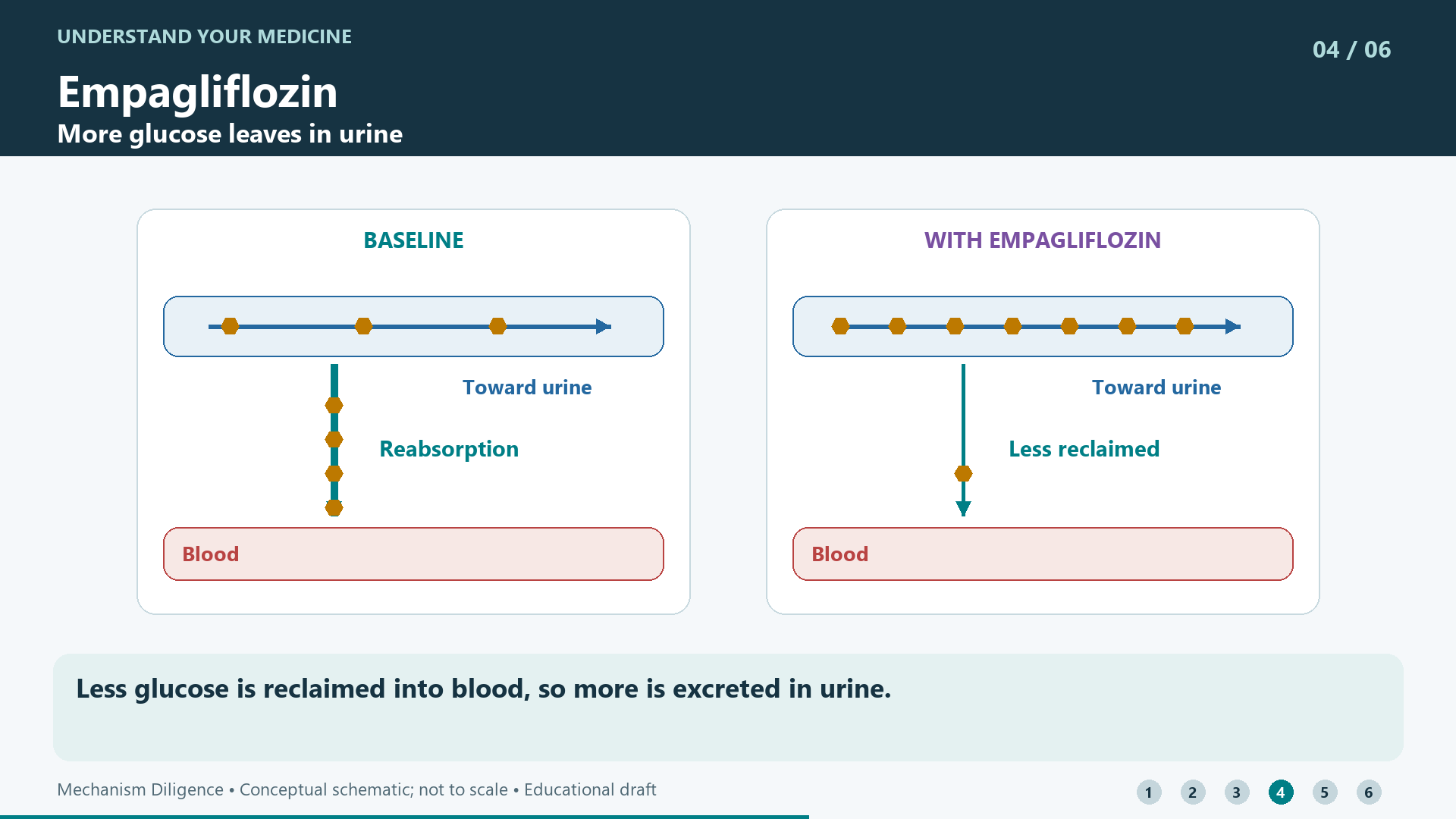
Less glucose is reclaimed into blood, so more is excreted in urine.
This kidney action lowers blood glucose without requiring direct insulin release. Its glucose-lowering effectiveness diminishes as kidney function worsens. Increased urine production can contribute to volume depletion; urinary glucose is an expected pharmacological effect, not proof that diabetes has worsened.
The split view is qualitative. Remaining glucose reabsorption and individual renal function prevent a universal numerical prediction.
- Jardiance prescribing information — DailyMed / Boehringer Ingelheim · Sections 1, 5.1–5.3, 8.6, 12.1 and 12.2 · US prescribing information; selected sections inspected · checked 2026-10-17
Chapter 5: Sodium delivery changes kidney feedback
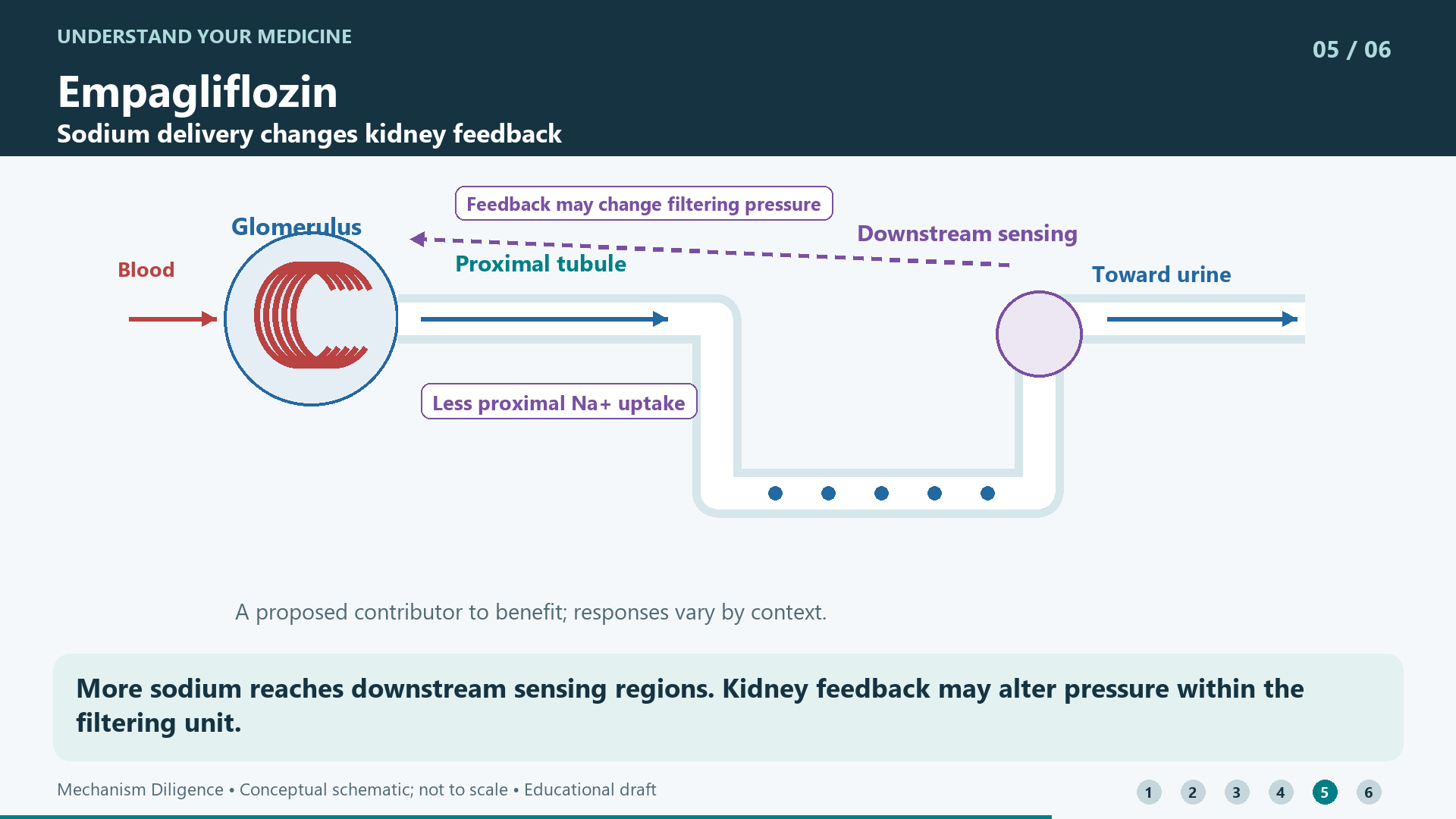
More sodium reaches downstream sensing regions. Kidney feedback may alter pressure within the filtering unit.
Reduced proximal sodium uptake increases downstream sodium delivery. The label describes possible effects on tubuloglomerular feedback and intraglomerular pressure. A small mechanistic study observed reduced hyperfiltration in selected participants with type 1 diabetes; it does not establish a universal hemodynamic response or this guide's treatment eligibility.
Feedback effects vary by context. The mechanistic trial's type 1 diabetes population is outside this guide and is not a recommendation for that use.
- Jardiance prescribing information — DailyMed / Boehringer Ingelheim · Sections 1, 5.1–5.3, 8.6, 12.1 and 12.2 · US prescribing information; selected sections inspected · checked 2026-10-17
- Cherney et al. — Renal hemodynamic effect of SGLT2 inhibition in type 1 diabetes · Abstract: population, renal-clearance measurements and conclusion; DOI 10.1161/CIRCULATIONAHA.113.005081 · Small open-label human mechanistic trial; abstract inspected; population outside this guide · checked 2026-10-17
Chapter 6: Clinical benefits exceed this simple diagram
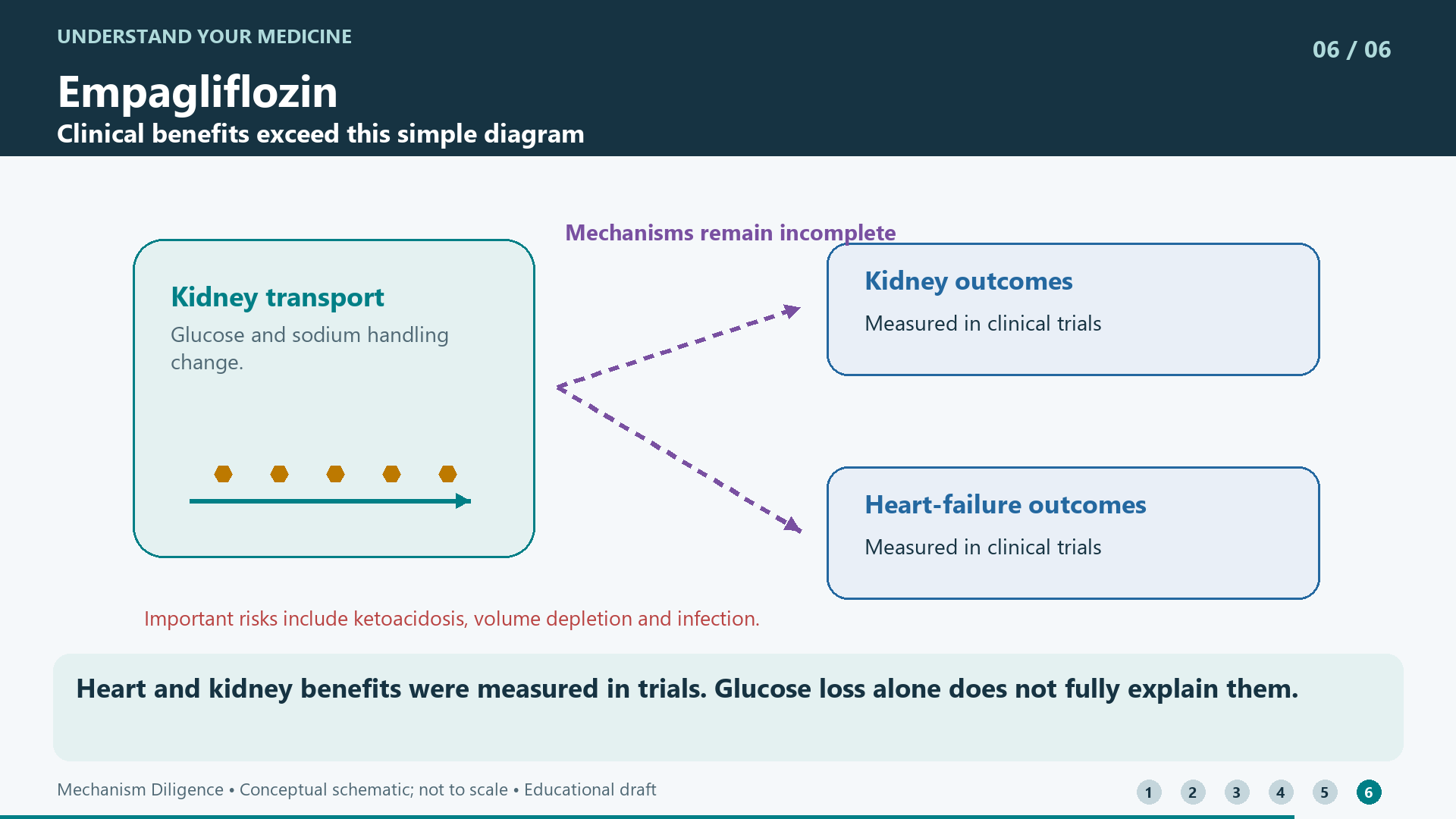
Heart and kidney benefits were measured in trials. Glucose loss alone does not fully explain them.
EMPA-KIDNEY and EMPEROR-Preserved found benefits for their specified composite outcomes, including participants without diabetes. Such trials establish clinical effects in studied populations, not which mechanism accounts for each benefit. Ketoacidosis can occur without very high glucose; other labeled risks also remain relevant.
Trial composite outcomes are not equal reductions in every component. This is not a complete mechanism, eligibility assessment or personalized benefit estimate.
- EMPA-KIDNEY — Empagliflozin in patients with chronic kidney disease · Abstract and Discussion; DOI 10.1056/NEJMoa2204233 · Randomized clinical outcome trial; indexed abstract/discussion inspected · checked 2026-10-17
- EMPEROR-Preserved — Empagliflozin in heart failure with a preserved ejection fraction · Abstract: primary composite outcome and diabetes subgroups; DOI 10.1056/NEJMoa2107038 · Randomized clinical outcome trial; abstract inspected · checked 2026-10-17
- Jardiance prescribing information — DailyMed / Boehringer Ingelheim · Sections 1, 5.1–5.3, 8.6, 12.1 and 12.2 · US prescribing information; selected sections inspected · checked 2026-10-17
Sources & scope
Source pages checked 2026-10-12. AI editorial source check; independent clinical review pending.
- Adult, single-ingredient scope only.
- No dose, regimen, switching or individual treatment advice.
- Selective safety summary; consult the full label and your care team.
- Source mapping is not independent clinical review.
DailyMed / NLM ↗ · Boehringer Ingelheim Pharmaceuticals, Inc. · page updated 2026-01-30