Byetta (Drug class: GLP-1 receptor agonist — immediate-release injection)
US Byetta: immediate-release exenatide solution in a multidose subcutaneous pen, labeled for glucose control in adults with type 2 diabetes alongside diet and exercise. FDA lists the branded presentations as discontinued. Extended-release exenatide is a different formulation; this guide does not provide dosing or switching instructions.
Educational draft · independent clinical review pending. Silent mechanism animation available; no recorded narration.
Uses / Symptoms
- Labeled to improve glucose control in adults with type 2 diabetes
- Used alongside diet and exercise; not an obesity indication
- US branded presentations listed as discontinued by FDA
Effects
- Enhances glucose-responsive insulin release
- Suppresses inappropriately elevated glucagon and slows gastric emptying
- Can lower fasting and after-meal glucose; it does not replace insulin
Side effects
- Nausea, vomiting and diarrhea are common
- Low glucose risk is greater with insulin or sulfonylureas
- Important warnings include pancreatitis, dehydration-related kidney injury, allergy and immune-mediated low platelets
How does Byetta work? What is the Mechanism Of Action (MOA)?
Byetta contains exenatide, which activates receptors normally used by the gut hormone GLP-1. It helps the pancreas release insulin when blood sugar is high and reduces glucagon, a signal that tells the liver to release sugar. It also slows food leaving the stomach; together, these actions can lower blood sugar.
The mechanism, step by step
- Nutrients trigger incretin signaling
GLP-1 helps communicate nutrient arrival from the gut to glucose-regulating tissues.
- Exenatide activates the GLP-1 receptor
Byetta supplies a peptide agonist in an immediate-release solution, not a depot microsphere formulation.
- Insulin secretion follows the glucose signal
Beta-cell signaling is amplified when glucose is elevated and subsides as glucose falls; combination-treatment hypoglycemia remains possible.
- Glucagon and gastric transit also change
Less inappropriate glucagon signaling and slower stomach emptying reduce contributors to raised glucose after a meal.
- Measure glucose control and tolerability
The combined actions can lower glucose, but response and adverse effects must be assessed. A target mechanism is not proof of every proposed clinical benefit.
A perspective-aware, six-chapter visual narration is available when JavaScript is enabled.
Questions & Answers (FAQ)
How does Byetta work?
Byetta contains exenatide, which activates receptors normally used by the gut hormone GLP-1. It helps the pancreas release insulin when blood sugar is high and reduces glucagon, a signal that tells the liver to release sugar. It also slows food leaving the stomach; together, these actions can lower blood sugar.
What is Byetta approved for?
Its US label covers improved glucose control in adults with type 2 diabetes alongside diet and exercise. Pediatric safety and effectiveness are not established; weight management and cardiovascular-risk reduction are not labeled indications.
Why is a discontinued product still listed here?
FDA lists both branded Byetta presentations as discontinued, but retains their approval history and labeling. DailyMed also retains labels and later package marketing-end dates. These different records do not verify pharmacy supply or establish a safety-related withdrawal; this page preserves product-specific education.
Can Byetta and Bydureon BCise instructions be exchanged?
No. Byetta is an immediate-release solution in a multidose pen, while BCise is an extended-release suspension in an autoinjector. Their delivery, instructions and kidney restrictions differ; the Byetta label advises against combining exenatide products.
Does Byetta have the same thyroid boxed warning as BCise?
No. The reviewed Byetta US label does not contain BCise's thyroid C-cell tumor boxed warning or its MTC/MEN2 contraindication. This is a formulation-specific labeling distinction, not evidence that Byetta has no serious risks.
Which adverse effects are common?
Nausea, vomiting, diarrhea, dizziness, headache and indigestion are among the common reported reactions. Persistent or severe symptoms need review, especially if fluid intake falls.
What is Byetta's kidney restriction?
The label does not recommend use in end-stage renal disease or severe renal impairment, defined there as creatinine clearance below 30 mL/min. It advises caution after renal transplantation. Do not substitute BCise's eGFR-below-45 criterion for this product-specific wording.
Can it cause low glucose?
Yes, particularly with insulin or a sulfonylurea. Glucose-dependent insulin secretion does not eliminate interaction-related hypoglycemia; medication changes should be planned with the treating team.
Which symptoms need urgent attention?
Severe persistent abdominal pain may indicate pancreatitis; unusual bruising or bleeding can reflect immune-mediated low platelets. Get emergency help for breathing difficulty or throat swelling. Dehydration from prolonged vomiting or diarrhea can injure the kidneys.
Why review oral medicines and warfarin?
Slower stomach emptying can change how quickly oral medicines are absorbed. Increased INR, sometimes with bleeding, has been reported with exenatide and warfarin. A pharmacist should review the exact medicines and monitoring needs.
What if anesthesia or deep sedation is planned?
Tell the procedure team that Byetta delays gastric emptying. Rare aspiration events have been reported with GLP-1 medicines despite usual fasting. The label does not establish one safe holding interval for everyone.
What other precautions matter?
Discuss pregnancy, severe gastroparesis, past pancreatitis, allergy and prior exenatide-related immune thrombocytopenia. Never share a pen, even after changing the needle. This selected guide does not replace the Medication Guide or individualized prescribing and device training.
Online stores and Pharmacies (Buy)
FDA lists branded Byetta as discontinued as of this check. Neither an accessible label nor a package marketing-end date verifies current supply. Consult the prescriber and licensed pharmacy about the prescribed formulation; no prices, substitute recommendation or stock guarantee are provided.
No live price, stock or individual eligibility is verified here.
Animation chapters, evidence & visual limits
Immediate-release exenatide subcutaneous solution for glucose control in adults with type 2 diabetes, with diet and exercise. Not the extended-release BCise formulation.
Educational draft; independent clinical review pending. Original explanatory schematics, not atomic structures, microscopy, measured concentrations or patient simulations. Selective mechanism and safety context, not complete prescribing information or dosing/switching instructions. The same ingredient does not make Byetta equivalent to BCise. No weight-management or cardiovascular outcome indication is inferred.
Original conceptual illustrations. AI-assisted editorial source check; independent clinical review pending. No recorded narration.
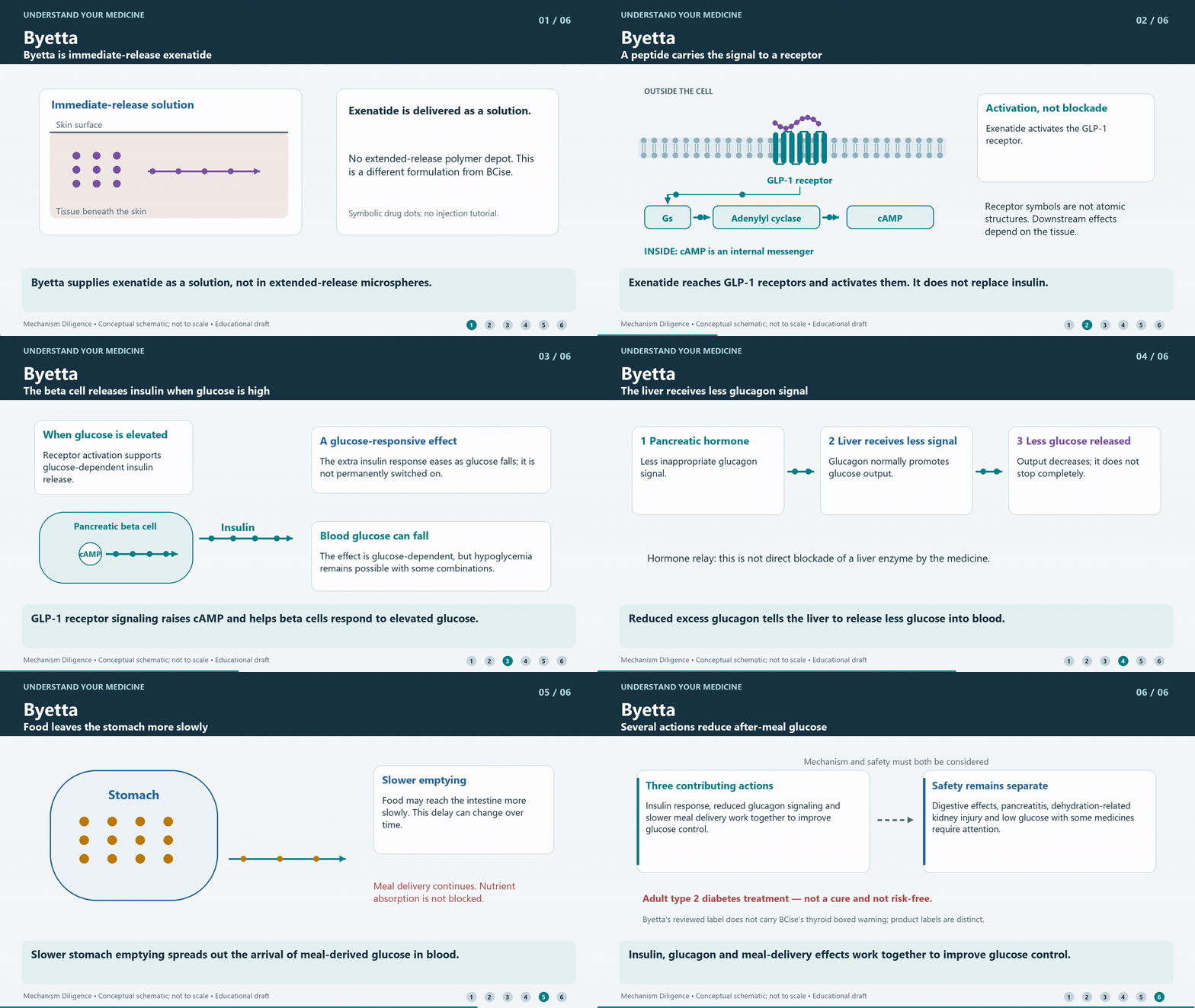
Chapter 1: Byetta is immediate-release exenatide
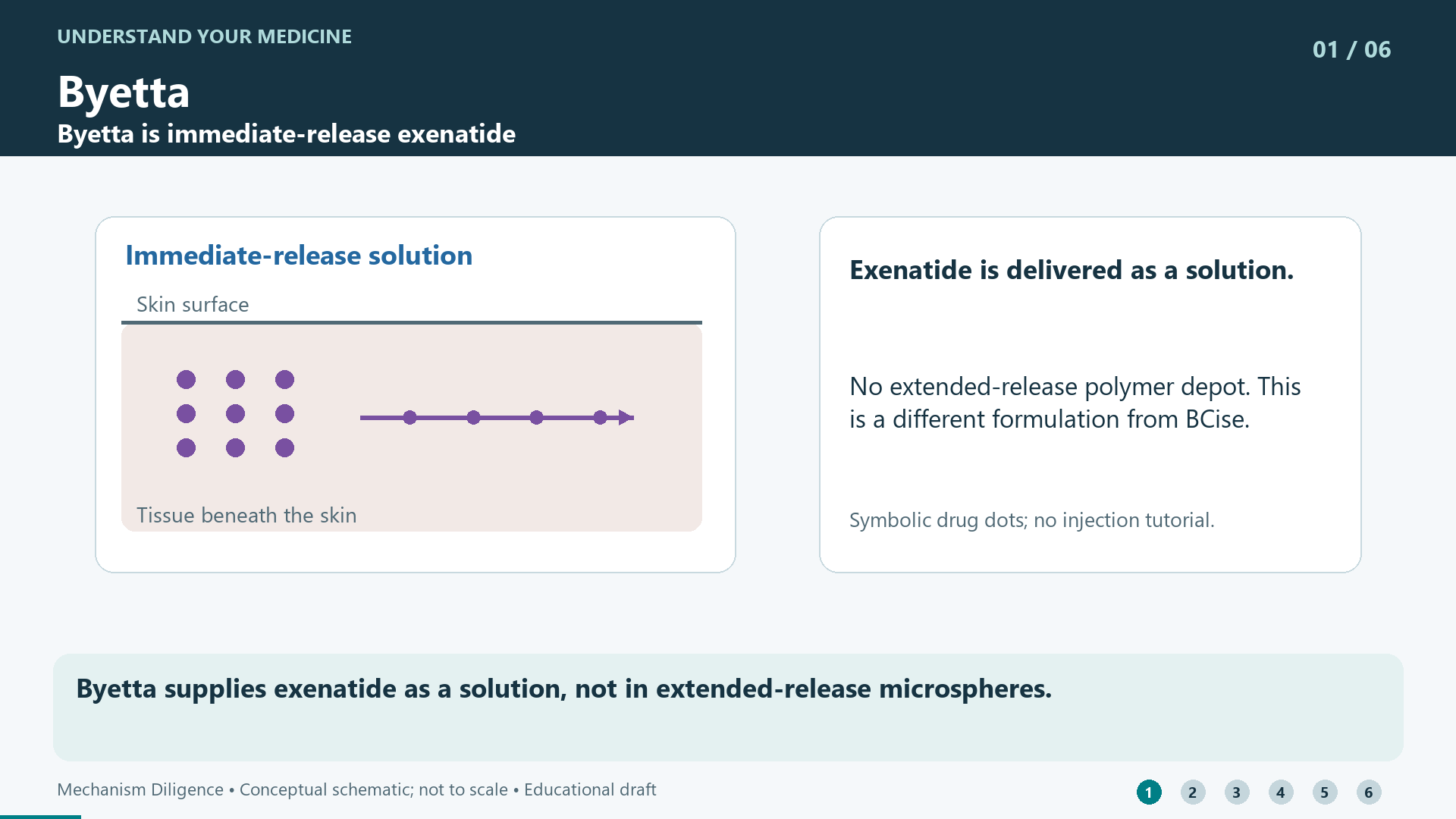
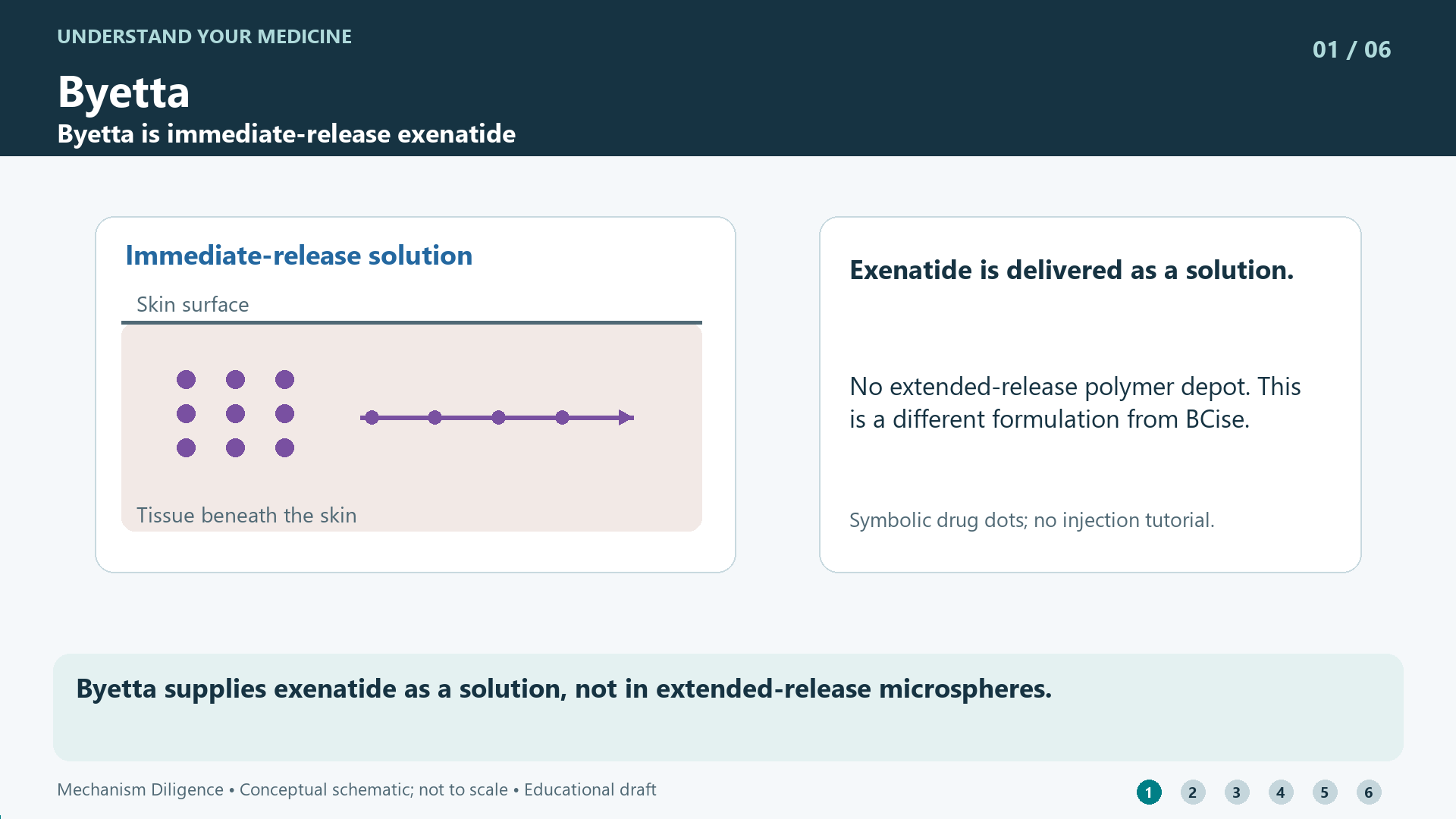
Byetta supplies exenatide as a solution, not in extended-release microspheres.
The pen contains a peptide GLP-1 receptor agonist. Immediate-release formulation differs from BCise's polymer depot; this scene identifies the product rather than teaching dosing or injection technique.
Animation timing is not absorption timing; availability and prescribing decisions are outside this scene.
- Byetta US prescribing information — AstraZeneca / DailyMed · Revised September 2025; sections 1, 5, 11, 12.1–12.3. · Primary source; relevant sections inspected · checked 2026-10-17
Chapter 2: A peptide carries the signal to a receptor
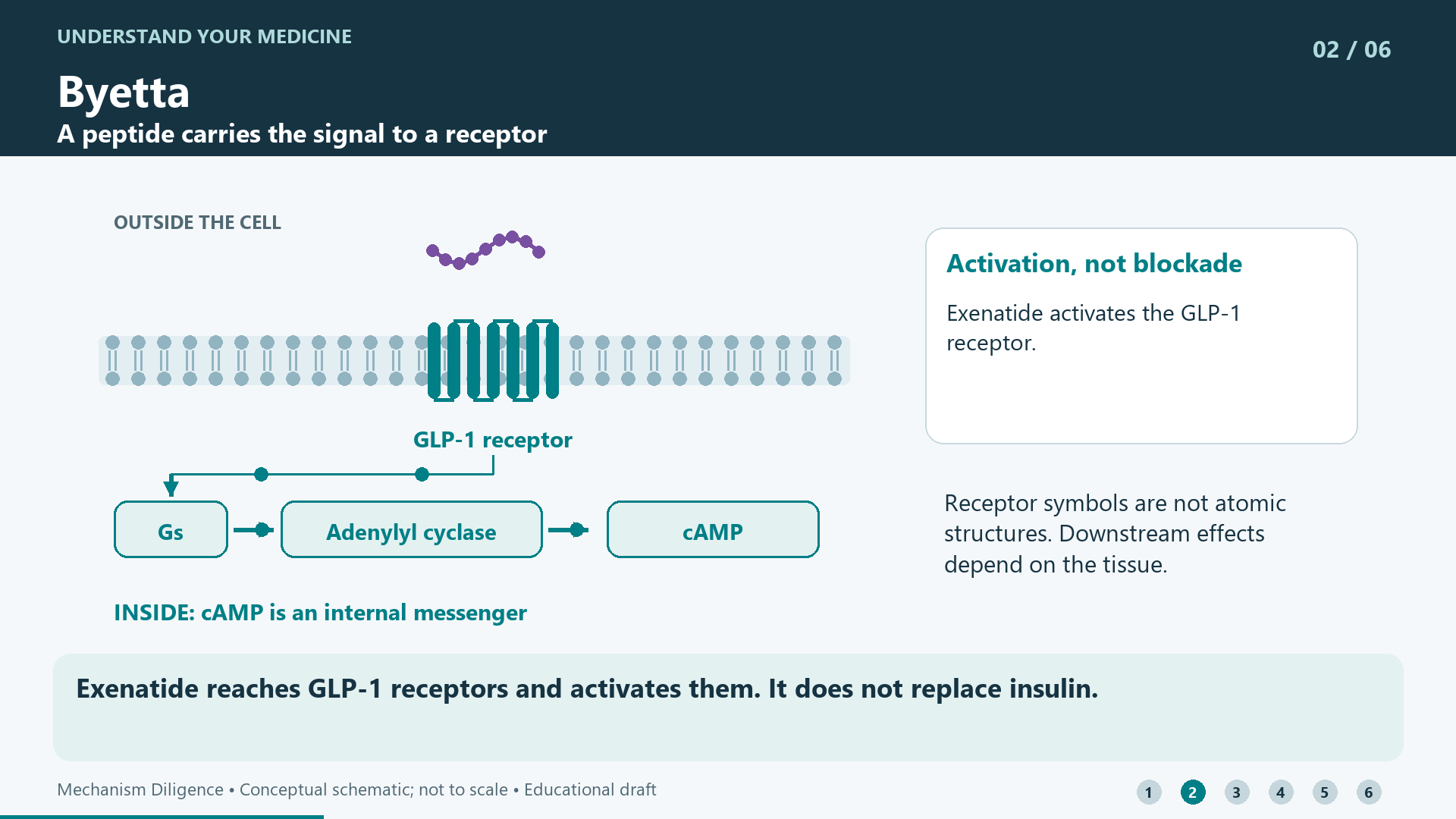
Exenatide reaches GLP-1 receptors and activates them. It does not replace insulin.
The exenatide peptide partially resembles natural GLP-1 and acts at the same receptor. Structural research supports exendin-4 activation of the GLP-1 receptor–Gs signaling complex.
Symbol shape is not a measured peptide structure or docking trajectory.
- Byetta US prescribing information — AstraZeneca / DailyMed · Revised September 2025; sections 1, 5, 11, 12.1–12.3. · Primary source; relevant sections inspected · checked 2026-10-17
- Dynamics of GLP-1R peptide agonist engagement are correlated with kinetics of G protein activation · Exendin-4-bound GLP-1R–Gs cryo-EM complex; structural/pharmacological results. · Primary structural study; indexed abstract and figure description inspected; direct full text blocked by CAPTCHA. No coordinates used. · checked 2026-10-17
Chapter 3: The beta cell releases insulin when glucose is high
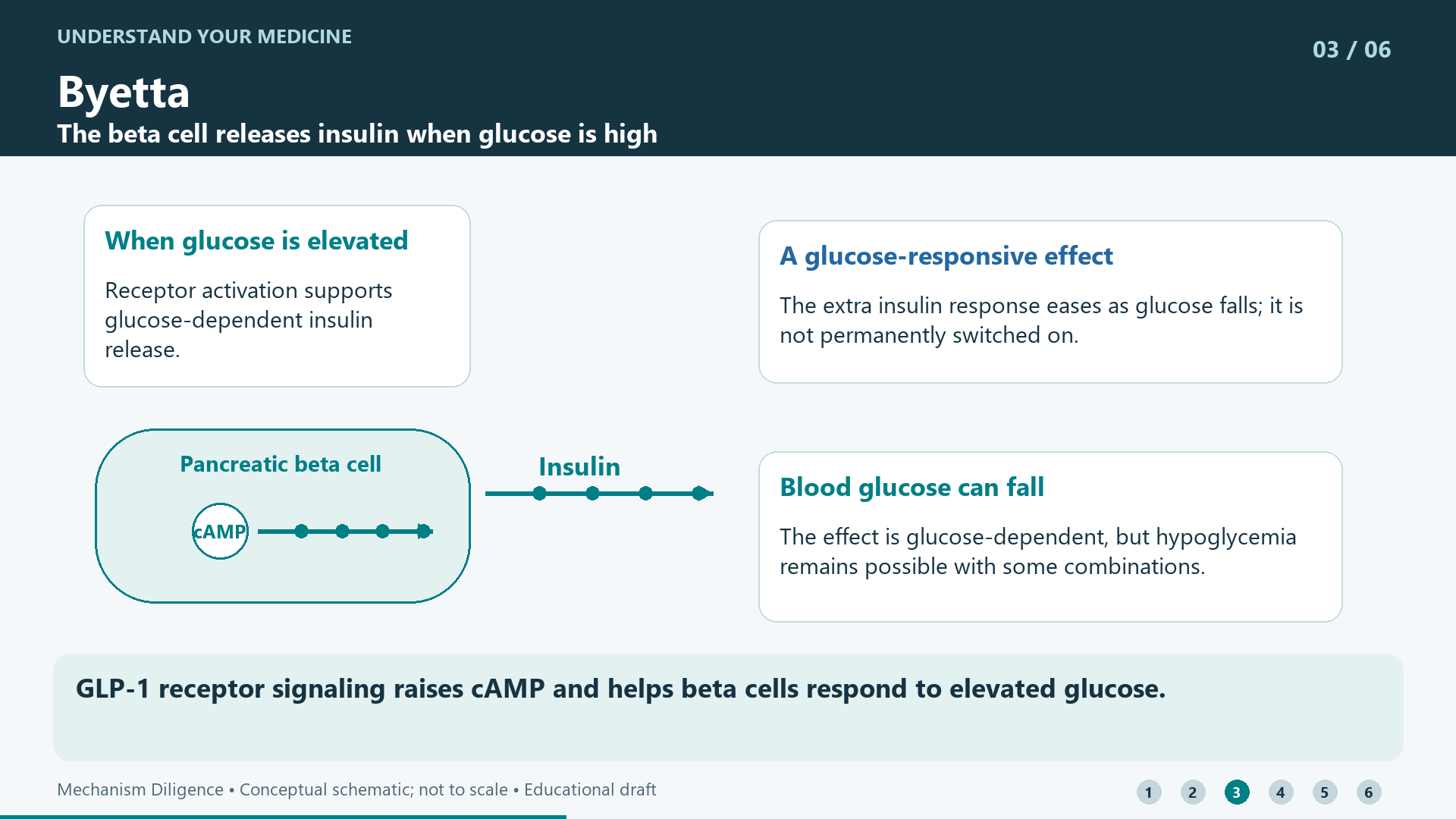
GLP-1 receptor signaling raises cAMP and helps beta cells respond to elevated glucose.
The response includes improved insulin secretion in the presence of glucose. It diminishes as glucose approaches normal; insulin and sulfonylureas can still increase the risk of low glucose.
Other intracellular pathways are omitted; glucose dependence is not a promise of zero hypoglycemia.
- Byetta US prescribing information — AstraZeneca / DailyMed · Revised September 2025; sections 1, 5, 11, 12.1–12.3. · Primary source; relevant sections inspected · checked 2026-10-17
- Degn et al. — Exenatide, glucose-dependent insulin secretion and counterregulation · Diabetes 2004; experimental intravenous glucose/hypoglycemia clamp in healthy volunteers. · Primary human mechanistic study; indexed abstract inspected. Not a BCise formulation trial. · checked 2026-10-17
Chapter 4: The liver receives less glucagon signal
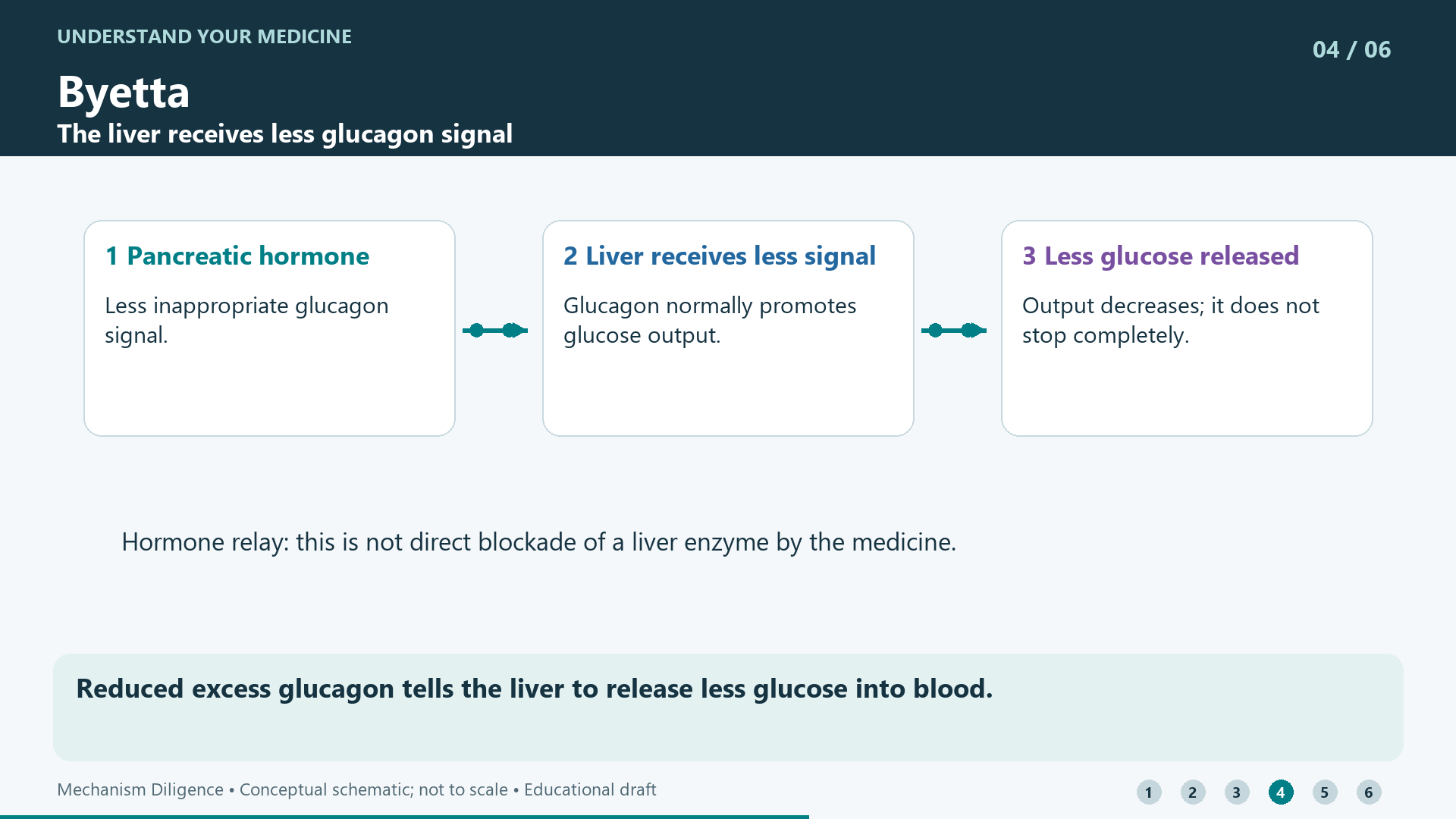
Reduced excess glucagon tells the liver to release less glucose into blood.
Byetta lowers inappropriately elevated glucagon during hyperglycemia. This can reduce hepatic glucose output and insulin demand; it does not shut off liver glucose production.
No direct receptor action on the liver is claimed by this simplified hormone relay.
- Byetta US prescribing information — AstraZeneca / DailyMed · Revised September 2025; sections 1, 5, 11, 12.1–12.3. · Primary source; relevant sections inspected · checked 2026-10-17
Chapter 5: Food leaves the stomach more slowly
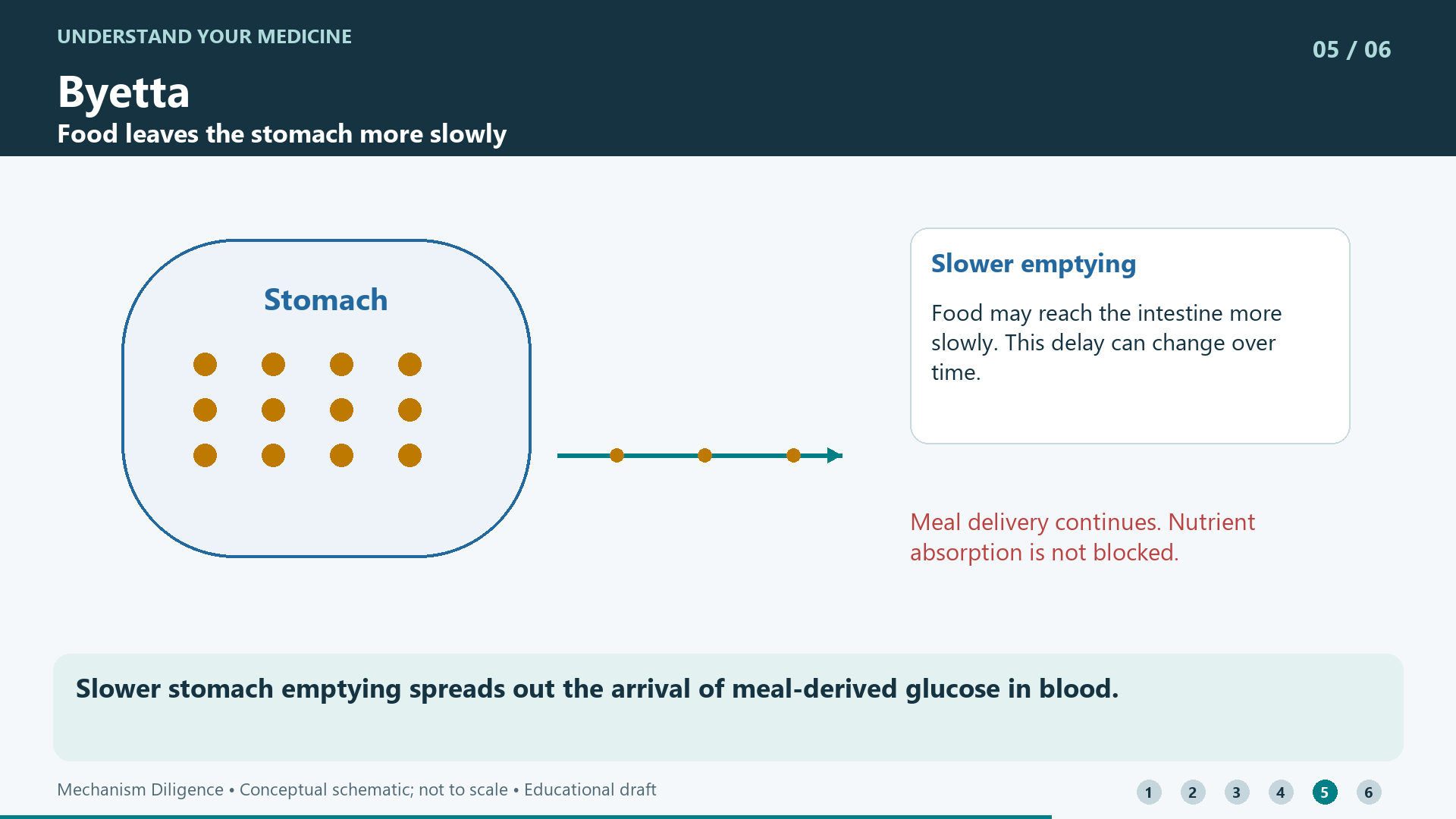
Slower stomach emptying spreads out the arrival of meal-derived glucose in blood.
Human scintigraphy studies measured delayed emptying with immediate-release exenatide. This alters the rate of nutrient delivery; it does not block nutrient absorption or mean the stomach permanently stops moving.
Short-term study findings do not predict a fixed delay for every meal or person.
- Byetta US prescribing information — AstraZeneca / DailyMed · Revised September 2025; sections 1, 5, 11, 12.1–12.3. · Primary source; relevant sections inspected · checked 2026-10-17
- Linnebjerg et al. — Exenatide gastric emptying and postprandial glycemia · Regulatory Peptides 2008; 151:123–129; DOI 10.1016/j.regpep.2008.07.003; 17 participants with type 2 diabetes. · Primary crossover study; author-institution abstract inspected; scintigraphy, short-term immediate-release exenatide. · checked 2026-10-17
Chapter 6: Several actions reduce after-meal glucose
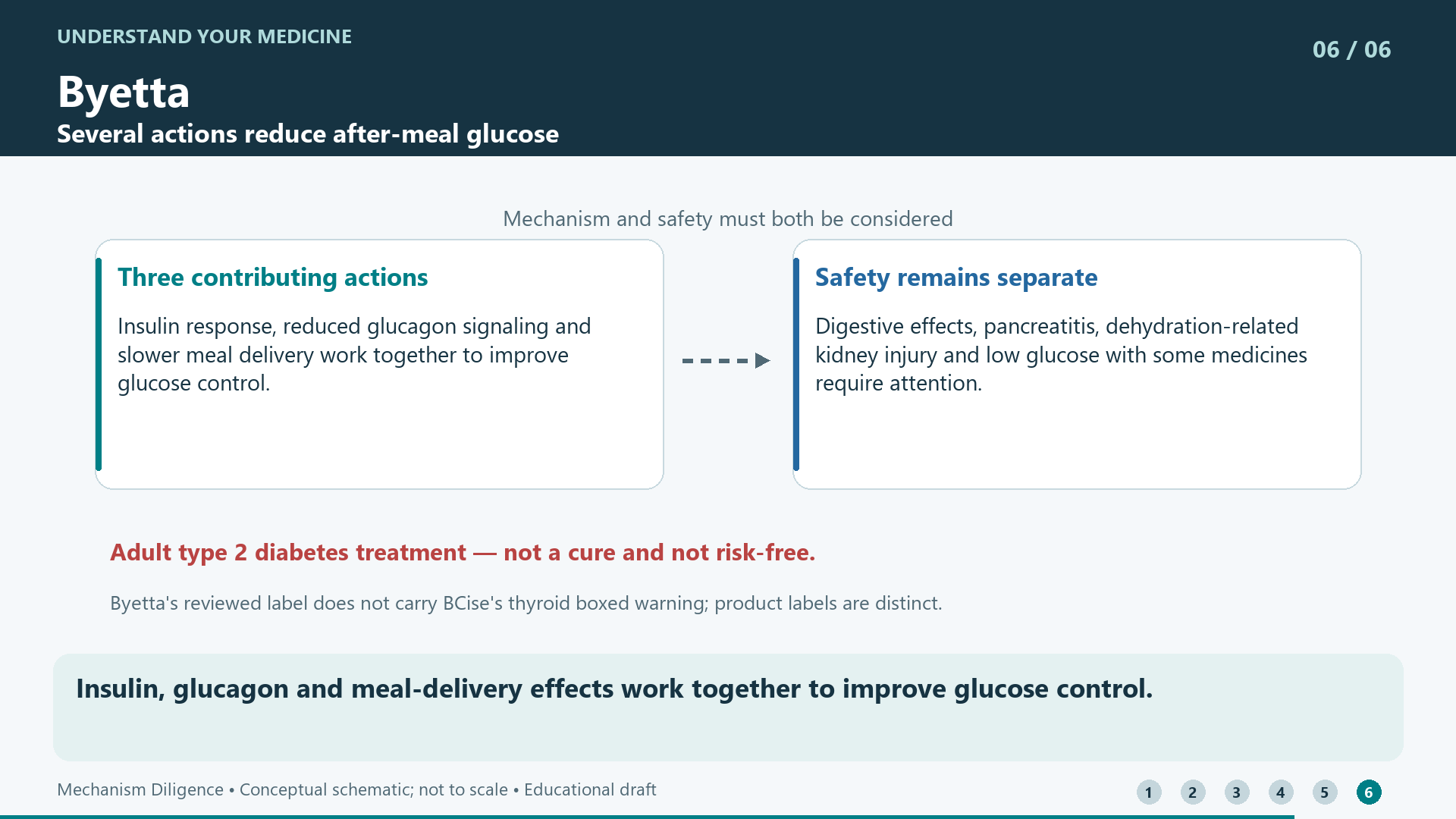
Insulin, glucagon and meal-delivery effects work together to improve glucose control.
This is treatment of adult type 2 diabetes, not a cure. Gastrointestinal effects, pancreatitis, dehydration-related kidney injury and medication-related hypoglycemia remain important. Byetta's reviewed label does not carry BCise's thyroid boxed warning.
Selective safety information; do not transfer another exenatide product's warnings or indications automatically.
- Byetta US prescribing information — AstraZeneca / DailyMed · Revised September 2025; sections 1, 5, 11, 12.1–12.3. · Primary source; relevant sections inspected · checked 2026-10-17
- Linnebjerg et al. — Exenatide gastric emptying and postprandial glycemia · Regulatory Peptides 2008; 151:123–129; DOI 10.1016/j.regpep.2008.07.003; 17 participants with type 2 diabetes. · Primary crossover study; author-institution abstract inspected; scintigraphy, short-term immediate-release exenatide. · checked 2026-10-17
References & Sources
Source pages checked 2026-10-17. AI-assisted editorial source checking is not independent clinical review. Sources support the summary, mechanism, safety and access information; references are also kept beside each question.
- DailyMed: Byetta — US prescribing information ↗ · SPL effective 2025-09-02; current highlights revised 09/2025; 1; 3–8; 11–12; Medication Guide; package marketing-end dates. No thyroid boxed warning in this label. Checked 2026-10-17.
- FDA Drugs@FDA: Byetta NDA 021773 ↗ · Both product presentations listed as discontinued; original approval and supplement history. Checked 2026-10-17; not pharmacy inventory.
- DailyMed: Bydureon BCise — formulation comparison ↗ · Boxed warning; 3–5; 8.6; 11. Used to distinguish extended-release exenatide from Byetta. Checked 2026-10-17.
- Degn et al. (2004): glucose-dependent exenatide effects ↗ · Primary trial abstract inspected: intravenous clamp study in twelve healthy volunteers; mechanistic support, not proof of zero clinical hypoglycemia risk. Checked 2026-10-17.
- Linnebjerg et al. (2008): gastric emptying and postprandial glycemia ↗ · Indexed primary-study abstract: 17 adults with type 2 diabetes, randomized crossover meal study. Full article not independently reviewed. Checked 2026-10-17.
Selective US-label-based information, not a complete safety list or a personal treatment recommendation. Do not change treatment based on this page; use the product-specific label and your care team's advice.