Medicine reading guide
Adalimumab (Humira)
TNF-blocking medicine for rheumatoid arthritis
Reference Humira in adults with moderately to severely active rheumatoid arthritis. Other indications, children, device instructions, doses and biosimilar interchangeability are outside this guide.
Educational information. Independent clinical review pending. This is a selective explanation, not the full prescribing information.
Uses / Symptoms
- Moderately to severely active rheumatoid arthritis in adults.
Effects
- Reduces signs and symptoms; improves function and slows structural damage.
Side effects
- Injection-site reactions are common.
- Serious infections and malignancies are discussed in the warnings; risk context varies by population.
Selected information; not a complete safety list. Full prescribing information and patient guidance ↗
How it works
Adalimumab attaches to TNF, an immune-system message that can drive joint inflammation. Blocking that message can reduce rheumatoid arthritis symptoms; it does not rebuild damaged joints or cure the disease.
Perspective answer sources
Section-two answers source-checked October 17, 2026; independent clinical review pending.
Read the mechanism, step by step
Humira is injected under the skin. Its active ingredient, adalimumab, is a monoclonal antibody: a protein designed to bind a particular target. That target is TNF-alpha, an immune-signaling molecule involved in normal inflammation and immune responses.
Adalimumab binds TNF-alpha and blocks its interaction with TNF receptors on cell surfaces. In rheumatoid arthritis, elevated TNF in joint fluid contributes to abnormal inflammation and joint damage. Blocking this signal reduces TNF signaling involved in inflammation.
For adults with moderately to severely active rheumatoid arthritis, labeled benefits include fewer signs and symptoms, better physical function and slower progression of structural damage. These are not a promise of cure or an individual outcome. Because TNF also contributes to immune defense, treatment carries serious infection risks, including tuberculosis.
Common questions
What is this explanation about?
Reference Humira for adult rheumatoid arthritis; other uses need separate evidence scopes.
What does adalimumab block?
It binds TNF-alpha and blocks its interaction with cell-surface TNF receptors.
What benefit can it provide in rheumatoid arthritis?
Reduced symptoms, improved physical function and slower structural damage progression.
What reactions can occur at the injection site?
Redness, itching, pain or swelling can occur.
Why are infections a concern?
Serious infections can lead to hospitalization or death. The label says not to start during an active infection.
Why is tuberculosis screening discussed?
The label calls for evaluation before treatment and periodic reassessment. TB can occur even after a negative initial test.
What about vaccines?
Live vaccines should be avoided during treatment; discuss vaccination plans with the treating team.
Does the boxed warning mention cancer?
Yes. The label discusses malignancies in adults as well as children. Some boxed-warning observations concern children or inflammatory bowel disease, so they are not adult rheumatoid-arthritis risk estimates. Individual risk depends on the population and other treatments.
What medical history needs discussion?
Hepatitis B, neurologic disease and heart failure are among the label’s additional safety concerns.
What if infection symptoms develop?
Contact your doctor immediately for signs of infection, such as fever, cough or painful urination, during or after treatment. Get emergency care for trouble breathing or swelling of the face or throat.
Can other medicines interact?
Tell your treating team about all medicines and vaccines. Combining Humira with abatacept or anakinra is not recommended because serious infection risk increases. Avoid live vaccines during treatment.
Animation chapters, evidence & visual limits
Reference Humira in adults with moderately to severely active rheumatoid arthritis; other indications, pediatric use, devices, dosing and biosimilar interchangeability are outside this animation.
Educational draft; independent clinical review pending. All artwork is an original explanatory schematic, not atomic coordinates, microscopy or measured concentrations. TNF is one part of an immune network. Blocking it does not switch off all immunity or cure rheumatoid arthritis. Fab crystal structures and whole-antibody solution studies are different experiments; neither establishes an individual clinical response. Selective mechanism and safety context, not complete prescribing information.
Original conceptual illustrations. AI-assisted editorial source check; independent clinical review pending. No recorded narration.
Chapter 1: TNF carries immune signals
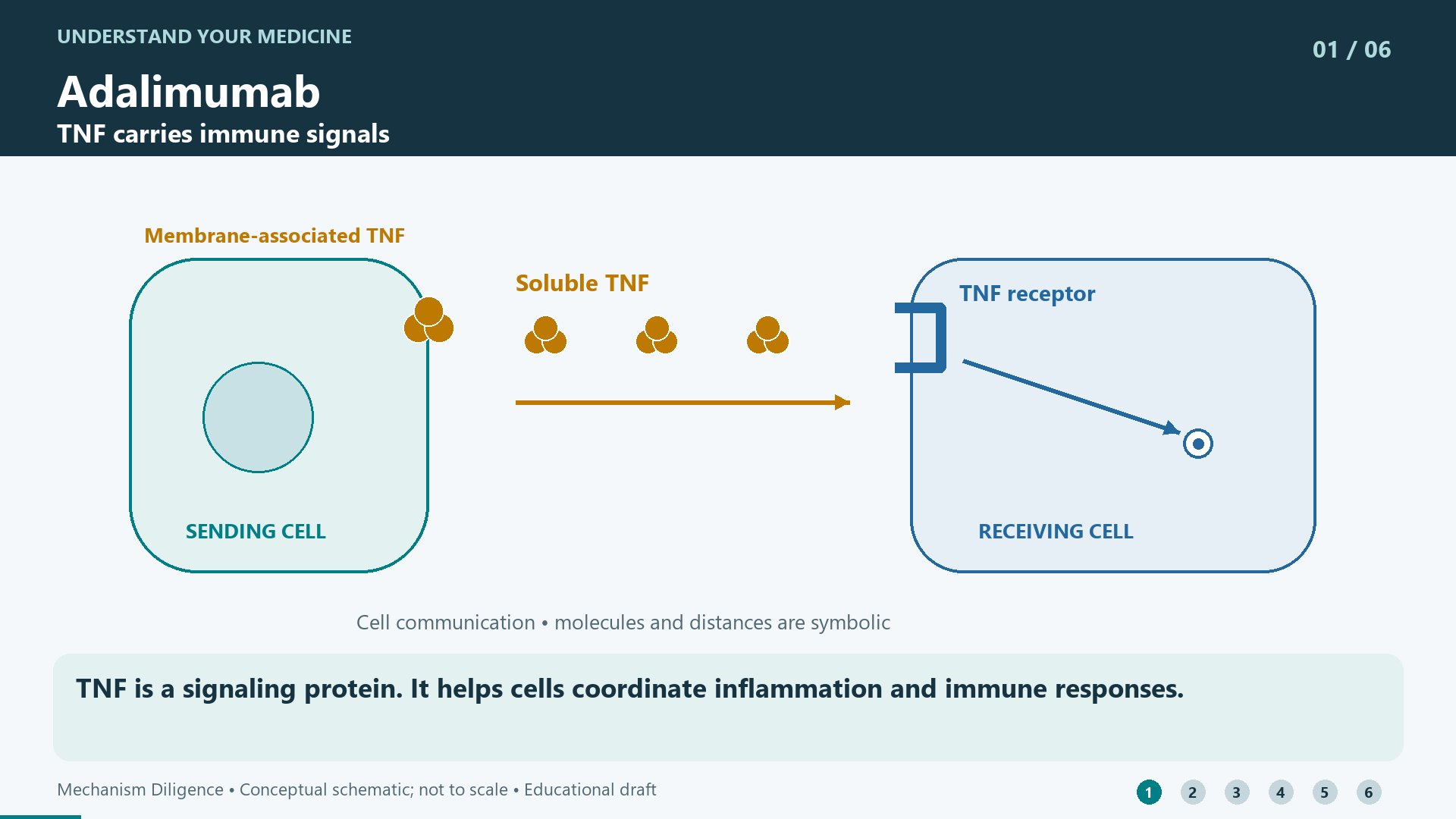
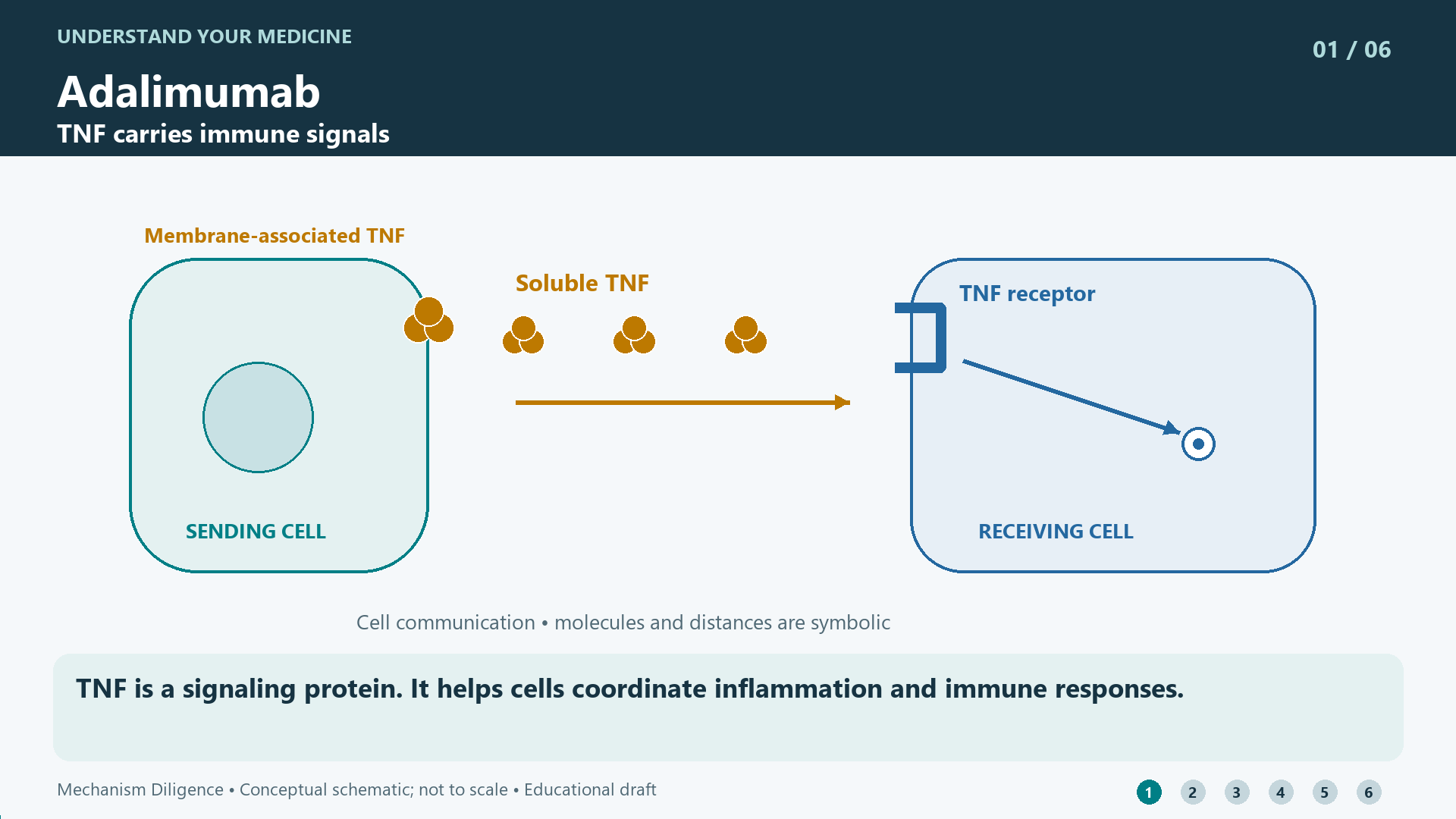
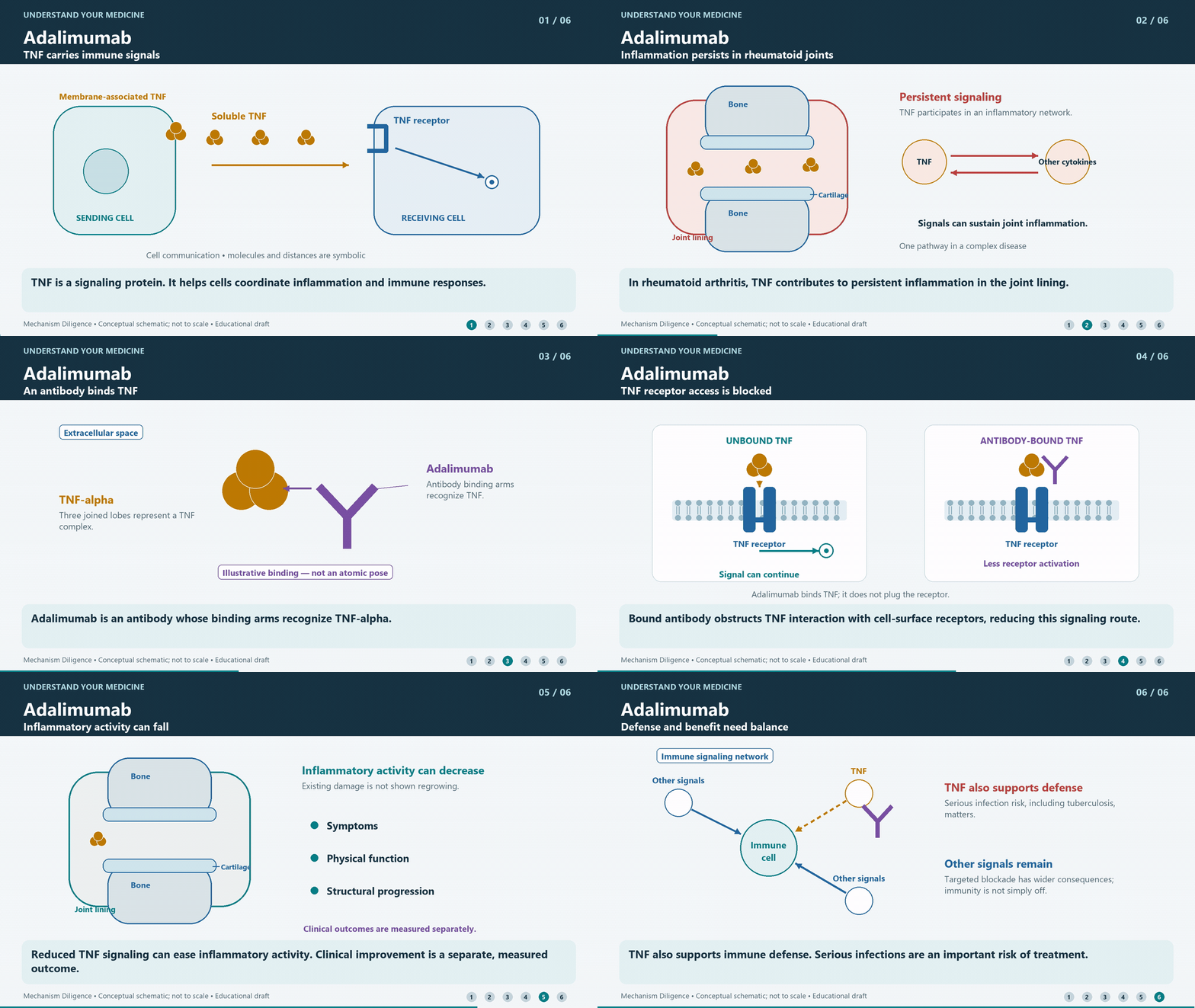
TNF is a signaling protein. It helps cells coordinate inflammation and immune responses.
TNF-alpha exists in membrane-associated and soluble forms. Soluble TNF can assemble as a three-subunit complex. Its receptor interactions communicate signals between cells; the diagram emphasizes communication, not an intrinsically harmful particle.
The three-lobed icon is symbolic. Receptor pathways and cellular context are simplified; TNF is not always harmful.
- Humira prescribing information — DailyMed / AbbVie · Sections 1.1, 5.1, 11, 12.1 and 12.2; boxed warning · US prescribing information; selected sections inspected · checked 2026-10-17
- Higher order structures of adalimumab, infliximab and their complexes with TNF-alpha · Abstract; Introduction; Results on antibody–TNF complexes; Discussion · Primary negative-stain and cryo-EM research; indexed excerpts inspected · checked 2026-10-17
Chapter 2: Inflammation persists in rheumatoid joints
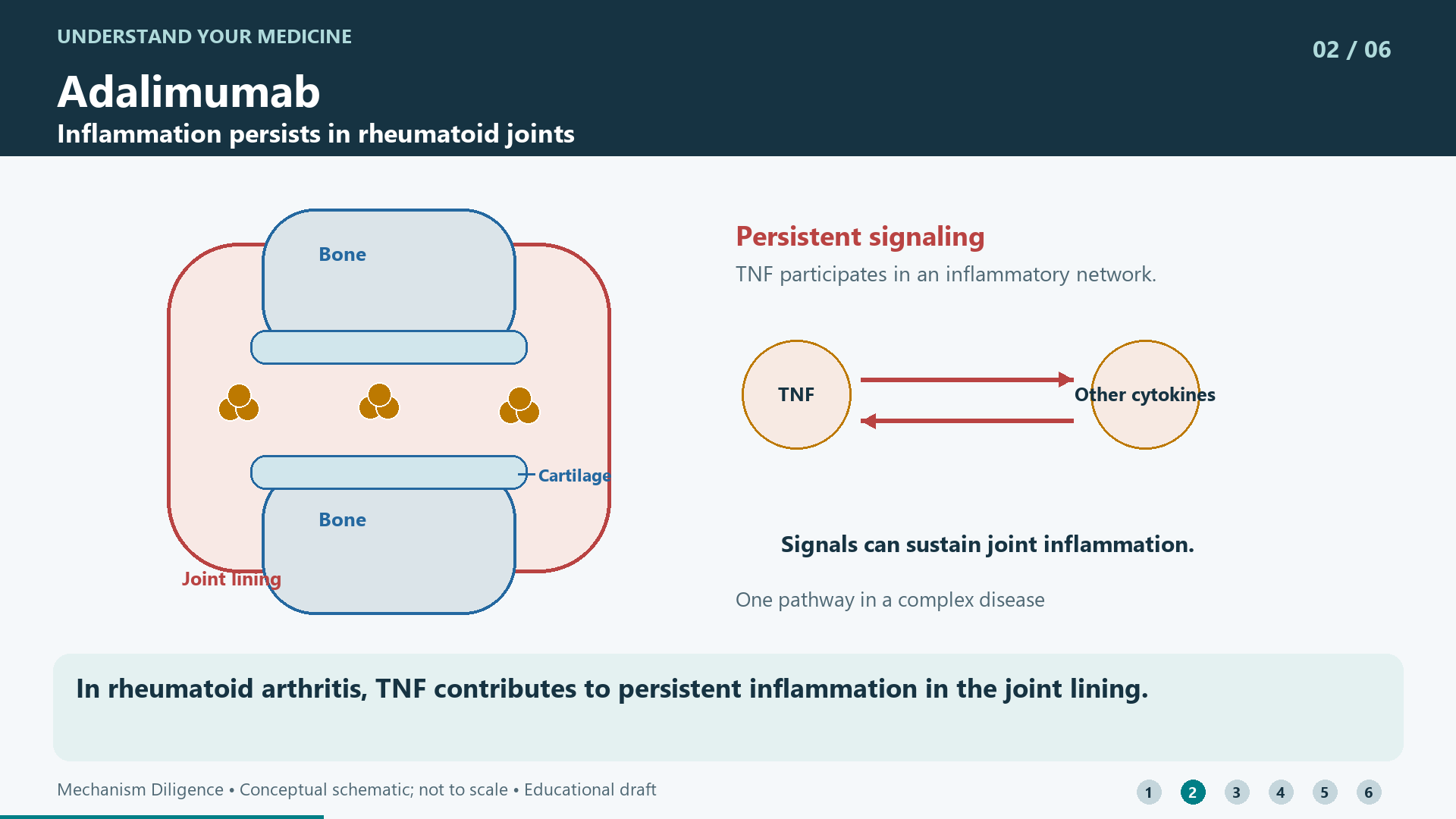
In rheumatoid arthritis, TNF contributes to persistent inflammation in the joint lining.
Elevated TNF in rheumatoid joint fluid accompanies inflammatory tissue injury. Human rheumatoid synovial-cell cultures showed that TNF neutralization could reduce IL-1 production, supporting a network role rather than a single-cause account of the disease.
The culture experiment used anti-TNF antibodies, not this medicine in patients. Rheumatoid arthritis has multiple interacting causes and pathways.
- Humira prescribing information — DailyMed / AbbVie · Sections 1.1, 5.1, 11, 12.1 and 12.2; boxed warning · US prescribing information; selected sections inspected · checked 2026-10-17
- Brennan et al. — TNF antibodies and synovial-cell interleukin-1 production · Abstract; Lancet 1989; DOI 10.1016/S0140-6736(89)90430-3 · Primary human tissue culture experiment; abstract inspected; not an adalimumab trial · checked 2026-10-17
Chapter 3: An antibody binds TNF
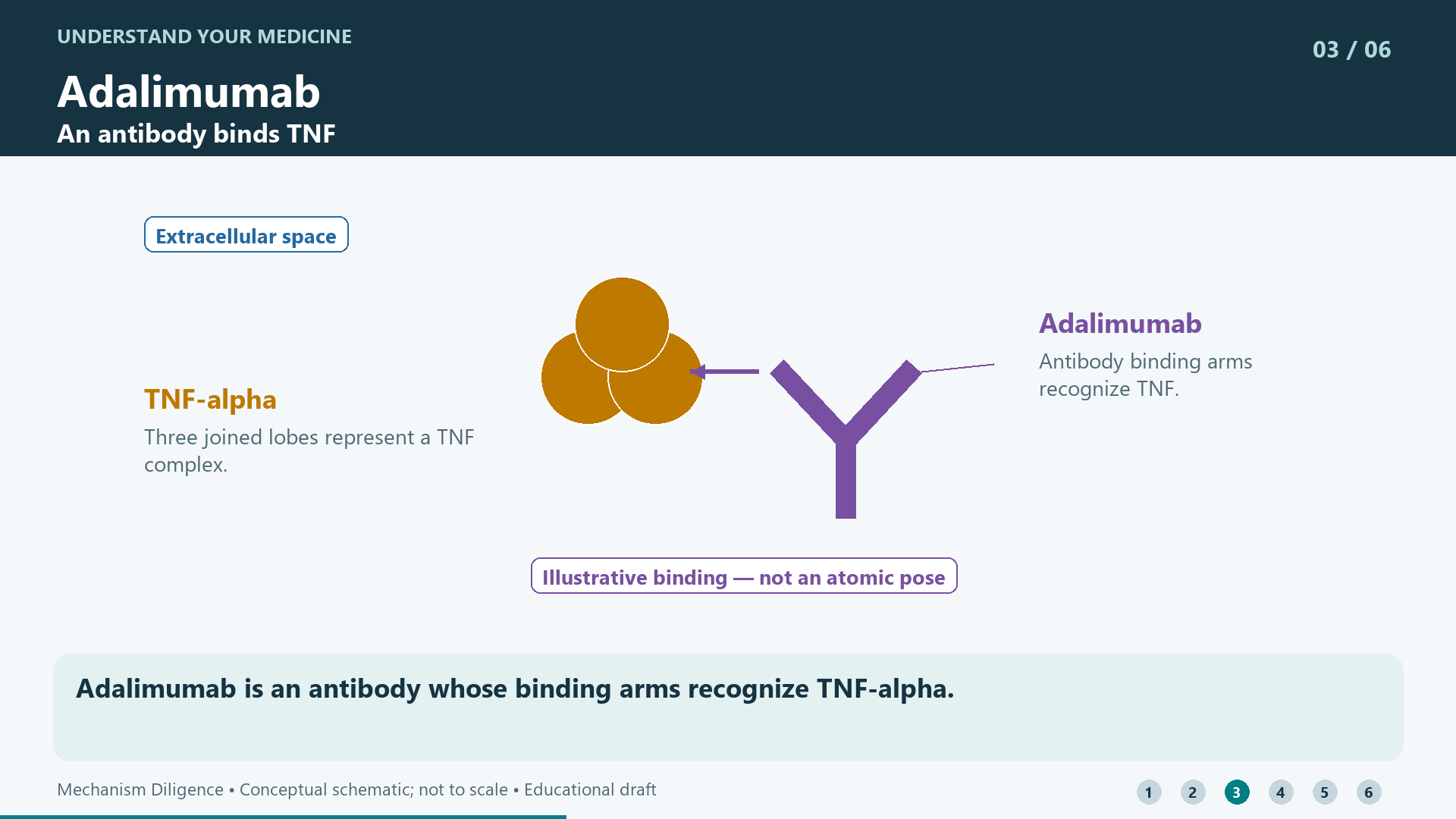
Adalimumab is an antibody whose binding arms recognize TNF-alpha.
Adalimumab is an IgG1 protein. Experiments with antibody fragments resolve a TNF-binding interface; whole-antibody electron microscopy shows several possible antibody–TNF assemblies. A single Y engaging one TNF symbol is therefore a teaching simplification, not fixed in-vivo stoichiometry.
Fab structures do not include an intact flexible antibody; full-antibody complexes vary with experimental conditions.
- Humira prescribing information — DailyMed / AbbVie · Sections 1.1, 5.1, 11, 12.1 and 12.2; boxed warning · US prescribing information; selected sections inspected · checked 2026-10-17
- Hu et al. — Comparison of the inhibition mechanisms of adalimumab and infliximab · Results: Structure of the TNF-alpha–Adalimumab Fab Complex; receptor-interface comparison; DOI 10.1074/jbc.M113.491530 · Primary crystallography and mutagenesis; indexed results excerpts inspected · checked 2026-10-17
- Higher order structures of adalimumab, infliximab and their complexes with TNF-alpha · Abstract; Introduction; Results on antibody–TNF complexes; Discussion · Primary negative-stain and cryo-EM research; indexed excerpts inspected · checked 2026-10-17
Chapter 4: TNF receptor access is blocked
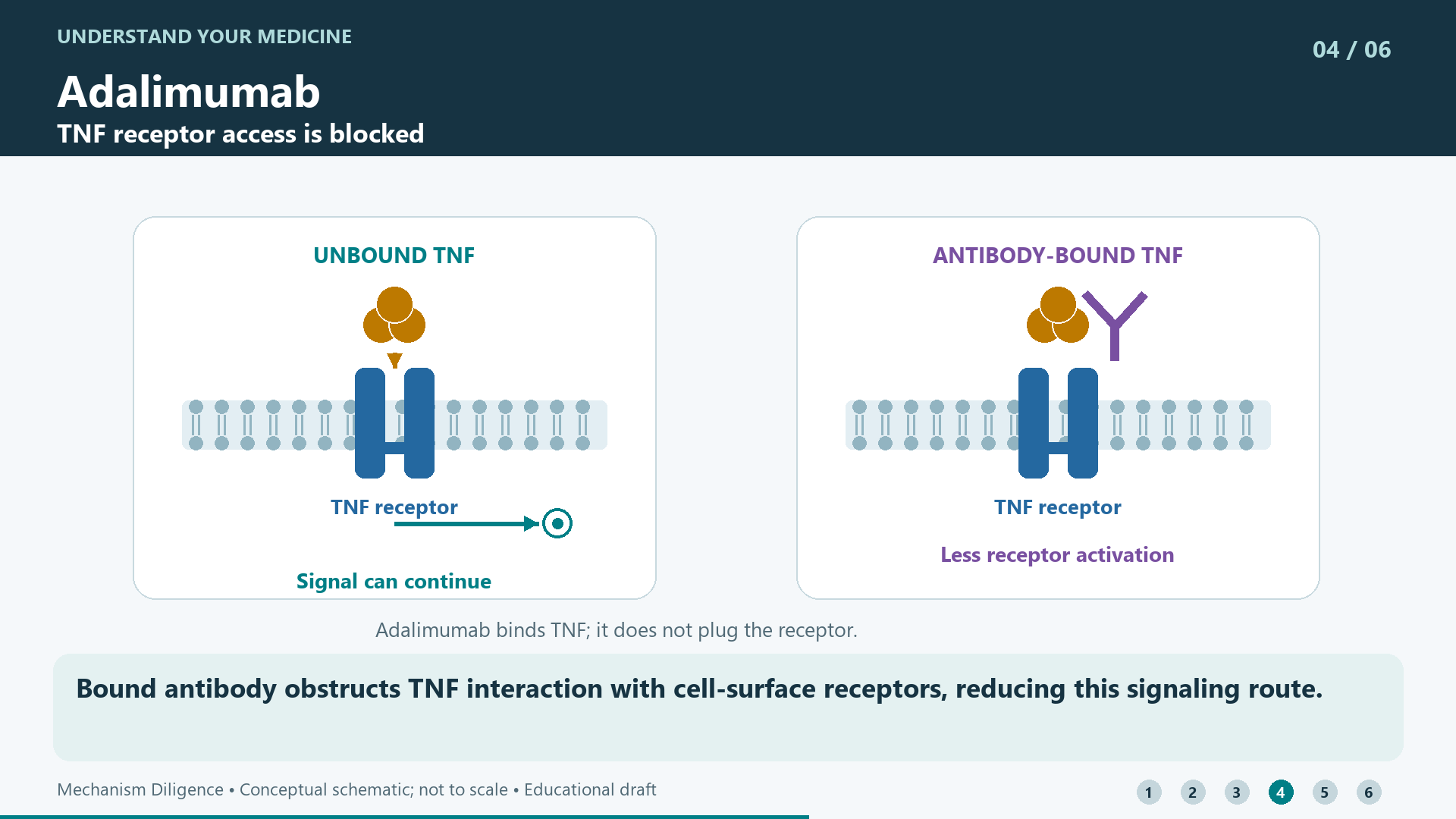
Bound antibody obstructs TNF interaction with cell-surface receptors, reducing this signaling route.
The TNF–adalimumab Fab structure and mutagenesis support overlap with the receptor-binding region. This explains neutralization by preventing productive TNF–receptor interaction. It does not mean the drug plugs the receptor, enters the cell or destroys every TNF-producing cell.
Spatial exclusion is a schematic interpretation of structural evidence. Clinical activity is not fully explained by a single binding event.
- Hu et al. — Comparison of the inhibition mechanisms of adalimumab and infliximab · Results: Structure of the TNF-alpha–Adalimumab Fab Complex; receptor-interface comparison; DOI 10.1074/jbc.M113.491530 · Primary crystallography and mutagenesis; indexed results excerpts inspected · checked 2026-10-17
- RCSB PDB 3WD5 — TNF-alpha with adalimumab Fab · Experimental method, biological assembly and primary citation abstract · Experimental structure record; metadata inspected, coordinates not used · checked 2026-10-17
- Humira prescribing information — DailyMed / AbbVie · Sections 1.1, 5.1, 11, 12.1 and 12.2; boxed warning · US prescribing information; selected sections inspected · checked 2026-10-17
Chapter 5: Inflammatory activity can fall
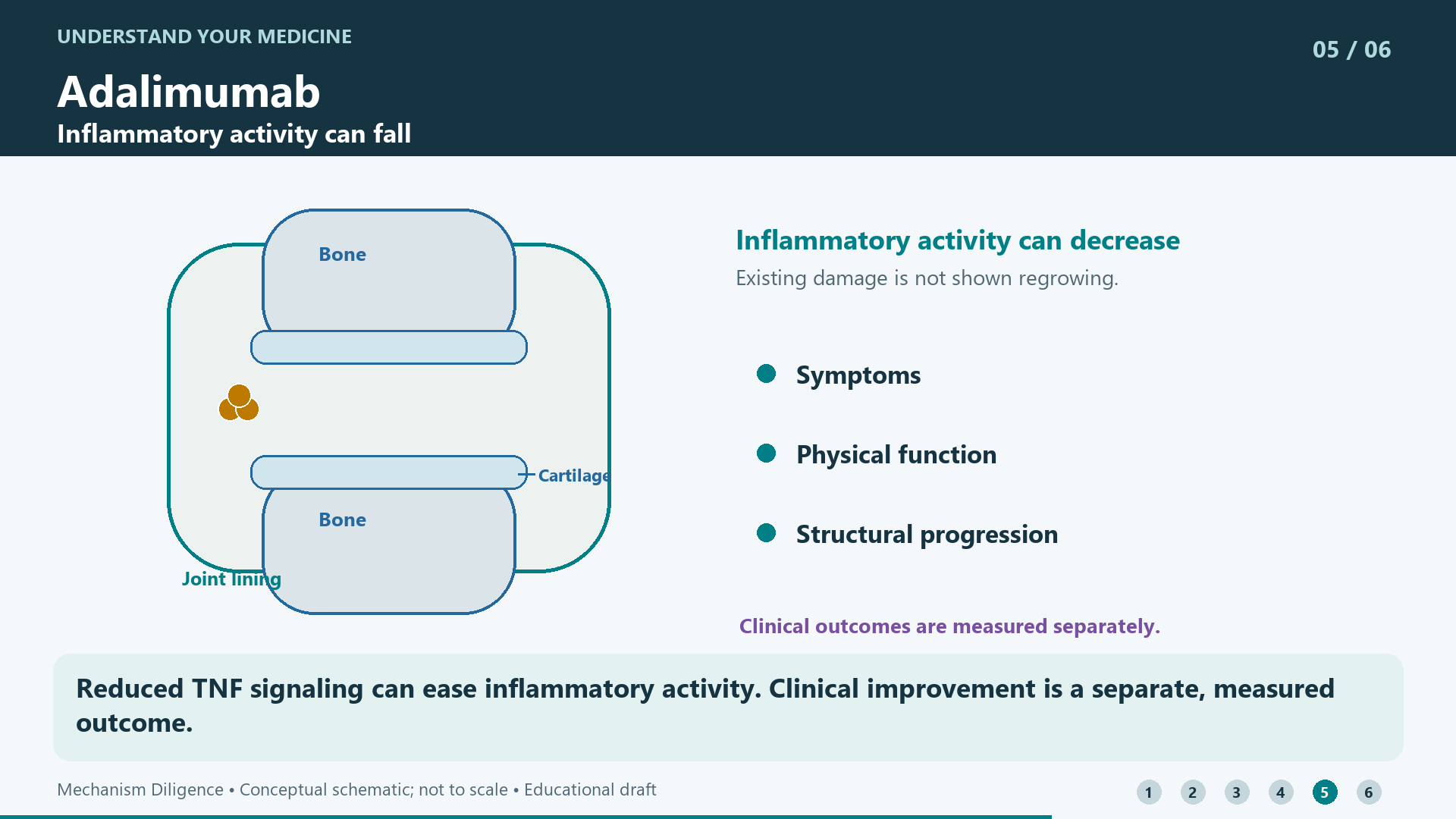
Reduced TNF signaling can ease inflammatory activity. Clinical improvement is a separate, measured outcome.
Treatment in rheumatoid arthritis is associated with lower inflammatory markers. Labeled benefits include symptom improvement, physical function and slower structural-damage progression; target occupancy is not a direct measure of any one person's benefit.
Do not animate damaged cartilage regrowing. Biomarker changes and clinical outcomes are related observations, not interchangeable measurements.
- Humira prescribing information — DailyMed / AbbVie · Sections 1.1, 5.1, 11, 12.1 and 12.2; boxed warning · US prescribing information; selected sections inspected · checked 2026-10-17
- Brennan et al. — TNF antibodies and synovial-cell interleukin-1 production · Abstract; Lancet 1989; DOI 10.1016/S0140-6736(89)90430-3 · Primary human tissue culture experiment; abstract inspected; not an adalimumab trial · checked 2026-10-17
Chapter 6: Defense and benefit need balance
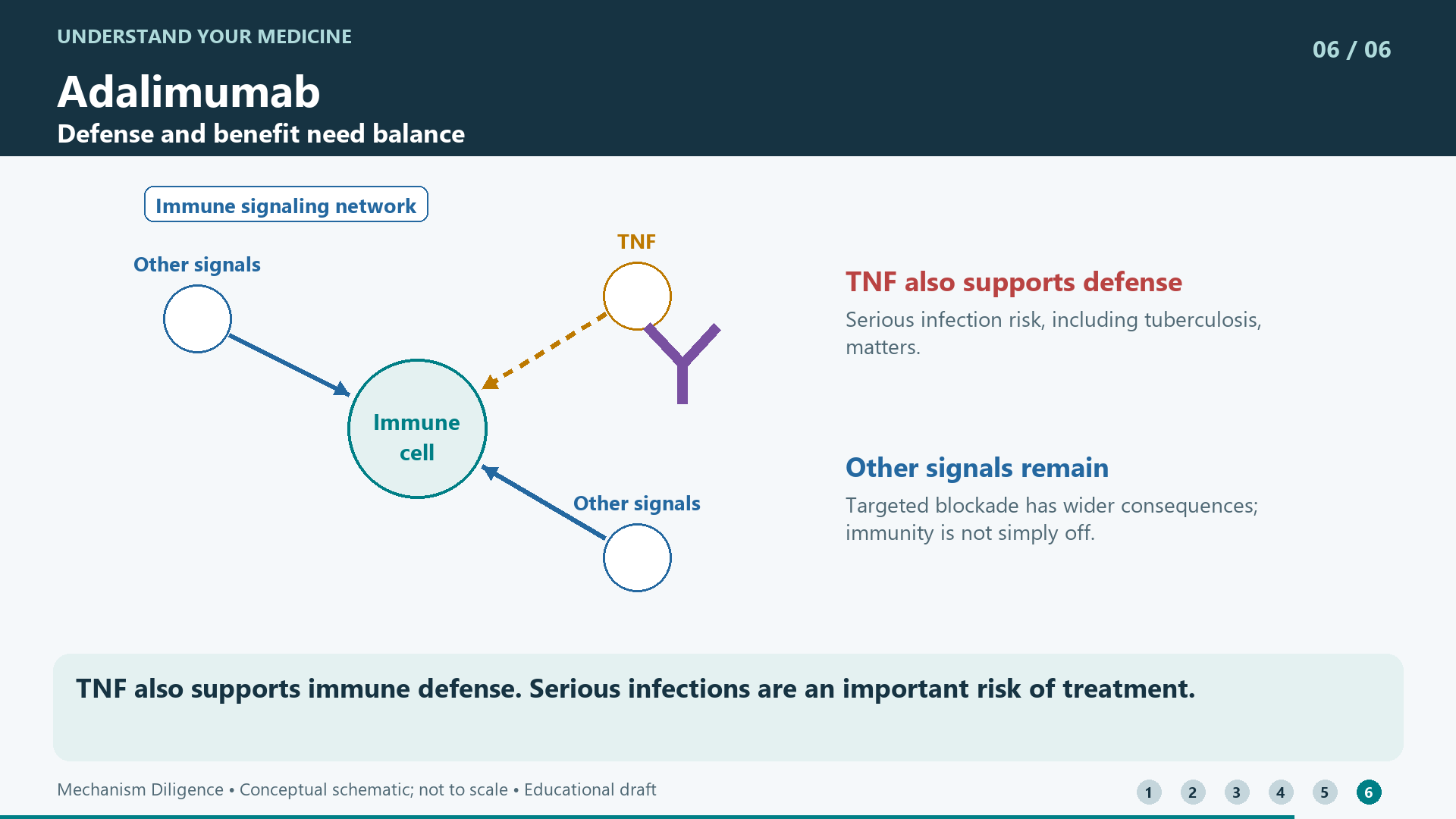
TNF also supports immune defense. Serious infections are an important risk of treatment.
TNF blockade can impair host defense, including defense against tuberculosis. The label also warns about malignancy. These risks require clinical assessment; this selective explanation does not establish suitability or predict an individual's response.
This is targeted pathway inhibition with broader consequences, not nonspecific shutdown of all immune activity. Safety coverage is selective.
- Humira prescribing information — DailyMed / AbbVie · Sections 1.1, 5.1, 11, 12.1 and 12.2; boxed warning · US prescribing information; selected sections inspected · checked 2026-10-17
Sources & scope
Source pages checked 2026-10-12. AI editorial source check; independent clinical review pending.
- No dosing or individual treatment advice.
- No inference of identical benefit or safety across all Humira indications or biosimilars.
- Selected boxed-warning summary is not a complete safety guide; malignancy evidence varies by population and must not be converted into an unsupported individual risk.
- In-vitro cell lysis and molecular geometry are not presented as established clinical mechanisms.
- Current retrieved SPL version is not an independent regulatory freshness or clinical review certification.
DailyMed / NLM ↗ · AbbVie Inc. · retained source retrieved 2026-10-09 · label effective 20251223
MedlinePlus / NLM ↗ · retained source retrieved 2026-10-09
Patient-language cross-check; multiple products/indications must not expand the selected scope.